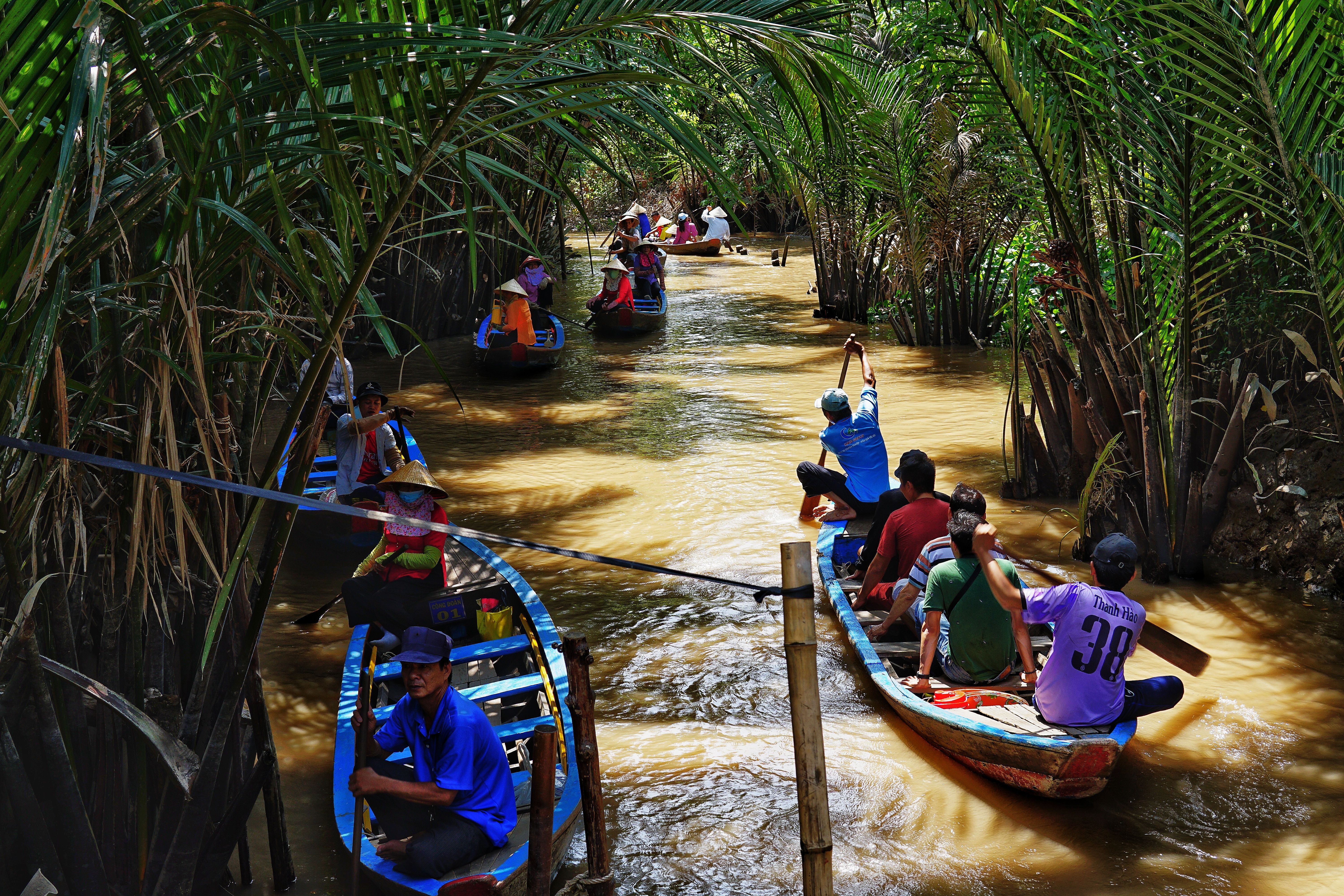
The standard Mekong Delta excursion from Ho Chi Minh City operates with the relentless precision of an assembly line. Every morning, fleets of air-conditioned buses deposit thousands of travelers onto crowded docks, ushering them through a heavily scripted itinerary: a brief boat ride, a staged floating market photo-op, a mandatory stop at a coconut candy workshop, and a rushed lunch before the long drive back. But a ground-level investigation reveals a completely different Mekong Delta waiting just beyond the tour bus radius. Opting for a homestay trades the manufactured efficiency of the day trip for genuine, unscripted access to Vietnam’s agricultural heartland. This dispatch breaks down the logistical truths, financial realities, and cultural payoff of ditching the standard cruise to spend the night with a local family on the banks of the Nine Dragons river.
Standard Route
Rushed 1-Day Group Tour
The Alternative
Overnight Family Homestay
True Highlight
Pre-dawn canal life
Transit Reality
2–3 Hours from Saigon (SGN)
"A day tour shows you the Mekong Delta as a curated museum exhibit. A homestay allows the Delta to show you an actual evening of its own life—after the megaphones power down and the river reclaims its quiet rhythm."
For travelers on a tight schedule, the standard day tour is undeniably efficient. For roughly $25 to $40, you are picked up in District 1, driven into the delta (usually My Tho or Ben Tre), and shuttled through a series of checkpoints.
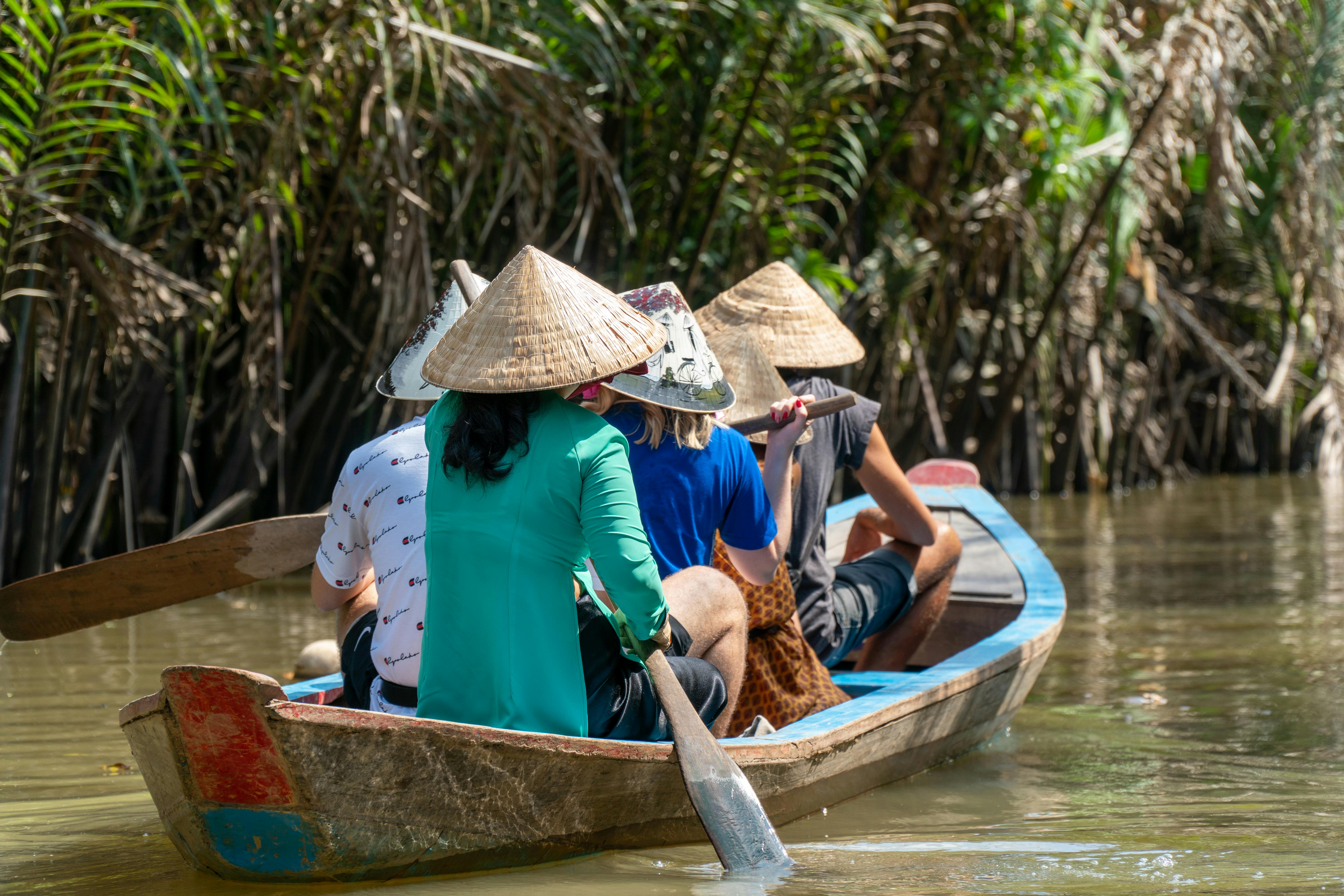
The Journalist's Critique: These trips are highly sanitized. The "floating markets" visited at 11:00 AM are largely staged for tourists, as genuine wholesale floating markets wrap up business by 7:30 AM. You will spend as much time being funneled through souvenir stalls—where guides earn commission—as you will observing actual river life. It is a spectacle designed for mass consumption, offering a glimpse of the delta, but little of its soul.
To breach the tourist bubble, you must stay overnight. A Mekong Delta homestay is typically a simple, open-air structure built on stilts over a canal or tucked deep into a fruit orchard.
The true value of this option lies in the margins of the day. Without the pressure of a waiting bus, you can borrow a rusty bicycle to ride along the narrow concrete pathways weaving through rice paddies. You observe the transition from day to evening: farmers washing their tools in the river, the smell of woodsmoke as families prepare dinner, and the deafening chorus of cicadas and frogs as darkness falls.
The Culinary Payoff: Instead of a mass-catered buffet, dinner is usually prepared by the host family. Expect Elephant Ear Fish (Ca Tai Tuong) fried to a crisp and rolled into fresh spring rolls, accompanied by fiery homegrown chilies and rice wine.
How do the different methods of tackling the Mekong Delta actually stack up when audited for cost and authenticity? Here is our ground-truth breakdown:
The Day-Tripper
Hover or Tap for Details 🔄
Day Tour Breakdown
Highly scripted, large group buses, forced shopping stops.
8-10 hours (mostly spent in transit).
Authentic Homestay
Hover or Tap for Details 🔄
Homestay Breakdown
Family-run accommodation, home-cooked meals, bicycle access.
2 Days / 1 Night minimum.
Boutique Eco-Lodge
Hover or Tap for Details 🔄
Eco-Lodge Breakdown
Private sampan tours, luxury bungalows with A/C, remote access.
2 to 3 relaxing days.
If you bypass the day-tour operators, getting to a homestay requires navigating Vietnam's domestic bus network. The primary hubs for independent travelers are Ben Tre (closer, known for coconuts) and Can Tho (further, home to the massive Cai Rang floating market).
Futa Buslines (Phuong Trang): This is the gold standard for ground transport. Their orange sleeper buses run continuously from Ho Chi Minh City’s Mien Tay bus station. Tickets cost roughly $5 to $8 USD. Upon arrival at the regional station, your homestay host will typically arrange a xe om (motorbike taxi) or small boat to bring you the rest of the way into the remote canals.
Choosing the homestay route means trading sterile luxury for visceral reality. You must calibrate your expectations before arriving.
⚠️ Investigation Rule: The Reality of Rural Vietnam
Authentic homestays are embedded in nature. This means you will encounter wildlife. Mosquitoes are prolific near the water, especially at dusk. While beds are equipped with mosquito nets, packing high-DEET repellent is non-negotiable. Furthermore, do not expect absolute silence; roosters, stray dogs, and the 5:00 AM hum of motorized long-tail boats on the canal will serve as your alarm clock.
Amenities: Most traditional homestays lack air conditioning, relying instead on powerful standing fans and the natural breeze coming off the river. Bathrooms are often shared, though clean, and hot water can occasionally be temperamental. If these factors are dealbreakers, bypass the traditional homestay for a mid-range "Eco-Lodge," which bridges the gap between authenticity and western hotel standards.
Frequently Asked Questions
Basic but generally comfortable — expect simple accommodation rather than hotel-standard amenities. You will typically have a fan, a mosquito net, and a basic private or shared bathroom. It is an exercise in cultural immersion, not luxury.
Roughly two to three hours by road, depending on the specific region visited (e.g., Ben Tre is closer; Can Tho is further). Traffic leaving Saigon can heavily impact this travel time.
Yes, but they are shrinking due to improved road infrastructure. Cai Rang in Can Tho is the largest, but to see it operating authentically, you must be on the water by 5:30 AM—which is nearly impossible on a standard day trip from Ho Chi Minh City.
Ready to Ditch the Tourist Traps? 🧳
Compare highly-rated Mekong Delta day tours against verified, locally-owned overnight homestays to secure your authentic experience.