
Travel influencers have long touted Egypt as one of the cheapest historical destinations on Earth, flashing thumbnails claiming you can live like a pharaoh for pennies. An on-the-ground financial audit reveals a starkly different reality. While an aggregate budget of $30 USD per day is mathematically achievable due to the heavy devaluation of the Egyptian Pound (EGP), it demands absolute discipline and a high tolerance for logistical friction. A strict $30 ceiling means sacrificing convenience at every turn: substituting private air-conditioned drivers with chaotic public microbuses, replacing hotel buffets with street-corner koshary stands, and agonizing over which ancient temples you can actually afford to enter. This dispatch strips away the romanticized marketing to document the exact compromises required to survive Egypt on a shoestring—and where that budget inevitably collapses.
The Lodging Reality
Unrated hostels & noisy downtown dars
Transit Friction
Microbuses and 3rd-class rail
The Subsistence Diet
Koshary, Ful, and street Falafel
The Budget Buster
Foreigner-tiered entrance fees
"The $30 number holds up, but only if you are willing to navigate Cairo exactly as a working-class Cairene does. The moment you step into the 'tourist infrastructure' bubble, your budget will hemorrhage."
If there is one area where Egypt delivers unparalleled value, it is domestic sustenance. Because the local economy is structured around heavily subsidized staples, food is remarkably cheap provided you avoid English-language menus.
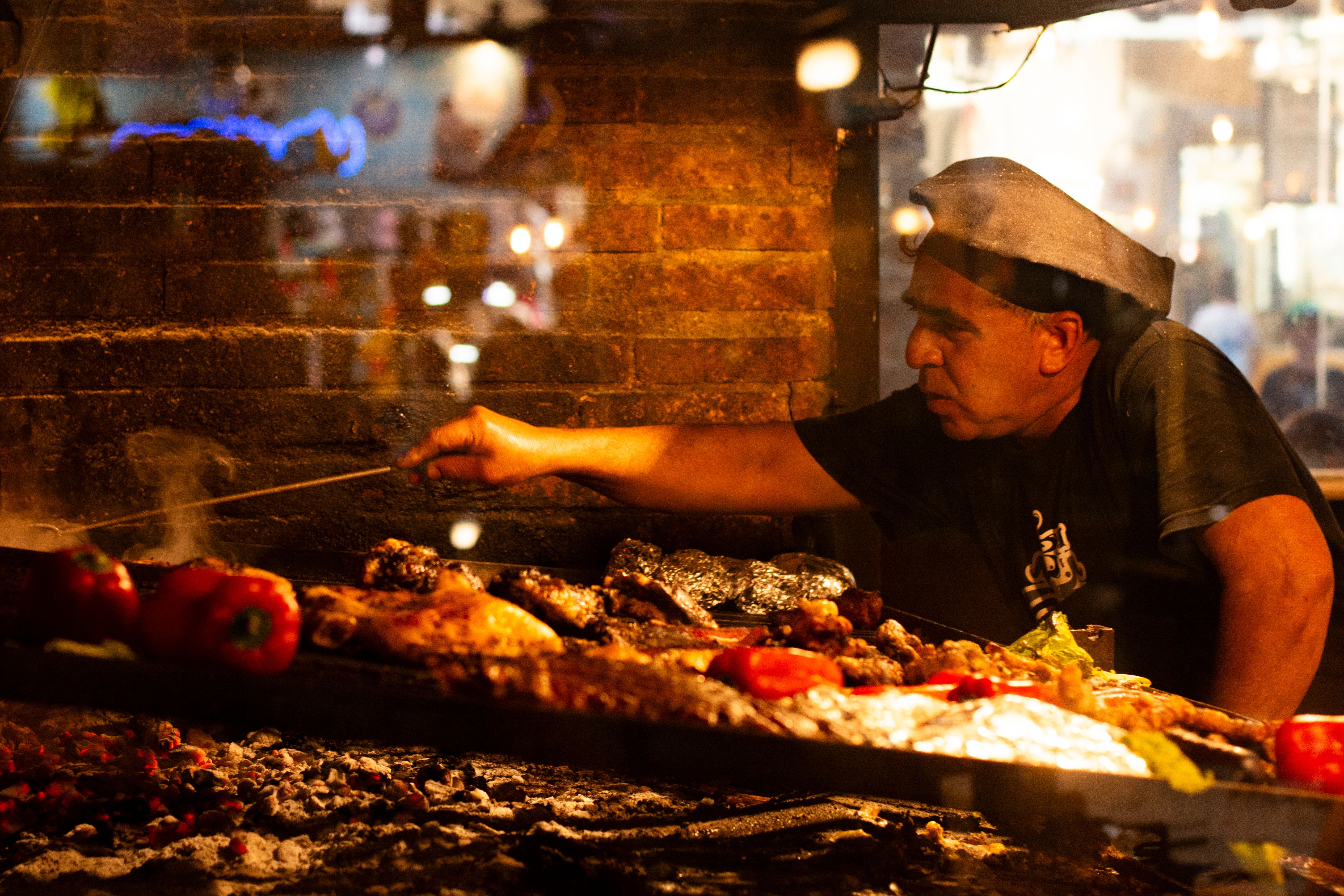
The Diet: A massive bowl of Koshary (a carb-heavy mix of macaroni, lentils, rice, chickpeas, and fried onions doused in tomato sauce) at a local staple like Abou Tarek costs around $1.50 USD. A breakfast of Ful Medames (fava bean stew) and fresh flatbread from a street cart runs less than $0.50. You can easily feed yourself 3,000 calories a day for under $5 USD if you eat strictly local.
The Lodging: In Cairo's downtown (Tahrir Square area) or Luxor's East Bank, basic hostel beds or aging guesthouse rooms range from $8 to $12 a night. The trade-off? You will likely deal with spotty Wi-Fi, cold showers, and the relentless, 24/7 cacophony of Egyptian car horns filtering through single-pane windows.
The Egyptian Ministry of Antiquities operates on a strictly tiered pricing model. Locals pay pennies; foreigners pay a premium that increases almost biannually. This is the single biggest threat to a $30/day limit.
The Ground Truth: General admission to the Giza Plateau is roughly $15 USD. However, if you want to go inside the Great Pyramid of Khufu, that requires an additional ticket costing roughly $30 USD. The same applies to the Valley of the Kings in Luxor: the base ticket grants entry to three minor tombs. Want to see Tutankhamun or Seti I? That’s another $10 to $40 per tomb.
The Strategy: A $30 daily average cannot support major sightseeing every day. You must implement "buffer days"—spending $15 total on a day wandering the free Khan el-Khalili market and Islamic Cairo, effectively "banking" the remaining $15 to afford a major temple ticket the next morning.
How do the different tiers of travel actually manifest in daily spending? We audited the real-time costs of three distinct travel styles in Cairo and Luxor.
The $30 Baseline
Hover or Tap for Details 🔄
Budget Breakdown
Downtown Cairo hostel dorm or basic Luxor West Bank fan room.
Koshary for dinner, public metro/microbuses, strictly one minor site ticket per day.
Mid-Range Frictionless
Hover or Tap for Details 🔄
Mid-Range Breakdown
Private en-suite room in a boutique Zamalek hotel with AC and breakfast.
Uber everywhere, sit-down restaurants (mixed grill), multiple site entries daily.
Guided Comfort
Hover or Tap for Details 🔄
Luxury Breakdown
5-star Nile-view rooms (e.g., Marriott Mena House or Winter Palace).
Private Egyptologist guides, air-conditioned tour vans, and fine dining.
Transportation is where the budget traveler is most frequently exploited. The moment you step out of a train station or airport, you will be swarmed by taxi drivers quoting rates 500% above the local market value.
The Journalist's Fix: In Cairo and Alexandria, never hail a cab off the street. Use Uber or InDrive exclusively. The app locks in the price, sidestepping the inevitable "meter is broken" extortion attempt.
For intercity travel (Cairo to Luxor/Aswan), avoid the "tourist trains" promoted by agencies. Instead, book the GoBus (a clean, air-conditioned coach service) for around $12-$15, or purchase a standard 1st-class ticket on the local Egyptian National Railways for roughly $15, saving you the $80+ cost of the foreigner-only sleeper train.
No budget in Egypt is complete without accounting for Baksheesh. It is not merely a tip; it is a fundamental pillar of the Egyptian micro-economy.
⚠️ Cultural Notice: The Tip Hustle
In Egypt, salaries for public sector workers (like temple guards or bathroom attendants) are unlivable. They survive on baksheesh. A temple guard will point out a carving you didn't ask to see and demand baksheesh. A man will hand you toilet paper in a public restroom and block the exit until paid. You must carry a stack of 10 and 20 EGP notes at all times. If you fight this system, you will be miserable. Accept it as a daily $3 to $5 tax on your budget.
Additionally, avoid booking "drivers" through your budget hostel. Hostels often take a 40% commission. To save money, walk out to the main road and negotiate a half-day rate directly with a local taxi driver—but be prepared to haggle fiercely.
Frequently Asked Questions
Mathematically yes, but practically very difficult. First-timers often spend closer to $45–$60 because they are unfamiliar with fair local prices, rely on hotel-booked drivers, and fall victim to the pervasive 'tourist tax' in unmetered taxis.
Monument entrance fees and private guided transport. The Egyptian government has aggressively raised ticket prices for foreigners. Entering the Great Pyramid or the Valley of the Kings will easily consume a full day's $30 budget on its own.
Baksheesh is mandatory for almost any service rendered, solicited or otherwise. Budget at least $3 to $5 USD equivalent per day strictly in small Egyptian Pound notes (5, 10, and 20 EGP bills) to hand out to bathroom attendants, temple guards, and bag handlers.
Audit Your Own Itinerary 🧳
Bypass the street hustlers. Compare verified rates for local transport, pre-booked site tickets, and vetted budget guesthouses.
Compare Guesthouse Rates Check Official Tour Prices