
Social media algorithms have a habit of flattening the world into a series of flawless, highly saturated backdrops. Chefchaouen—Morocco’s legendary "Blue Pearl" hidden deep within the rugged Rif Mountains—is arguably the ultimate casualty of this phenomenon. Open any travel influencer’s feed, and you'll see flowing dresses against impossibly empty azure alleyways. But an on-the-ground investigation reveals a starkly different, yet infinitely more fascinating, reality. Beyond the curated aesthetics and the daily influx of day-trippers fighting for the perfect angle lies a deeply complex, resilient mountain community. This dispatch uncovers the unfiltered truth of Chefchaouen, navigating its hidden shadow economy, its authentic culinary heritage, and how to experience the soul of the medina long after the camera flashes fade.
Transit Hub
Bus from Tangier (TNG)
Optimal Time
March - May (Spring)
Stay Style
Heritage Dar / Riads
Local Reality
Mountain Bohemian
"To truly understand Chefchaouen, you must put down the camera. The real pulse of the city isn't found at the end of a selfie stick, but in the quiet, unpainted alleys where the mountain breeze carries the scent of baking bread and local realities."
Let’s set the record straight: Chefchaouen is astonishingly beautiful. The mesmerizing gradient of cerulean, indigo, and powder blue cascading down the mountainside is an architectural marvel. However, what the viral feeds omit is the logistical reality of capturing those shots.
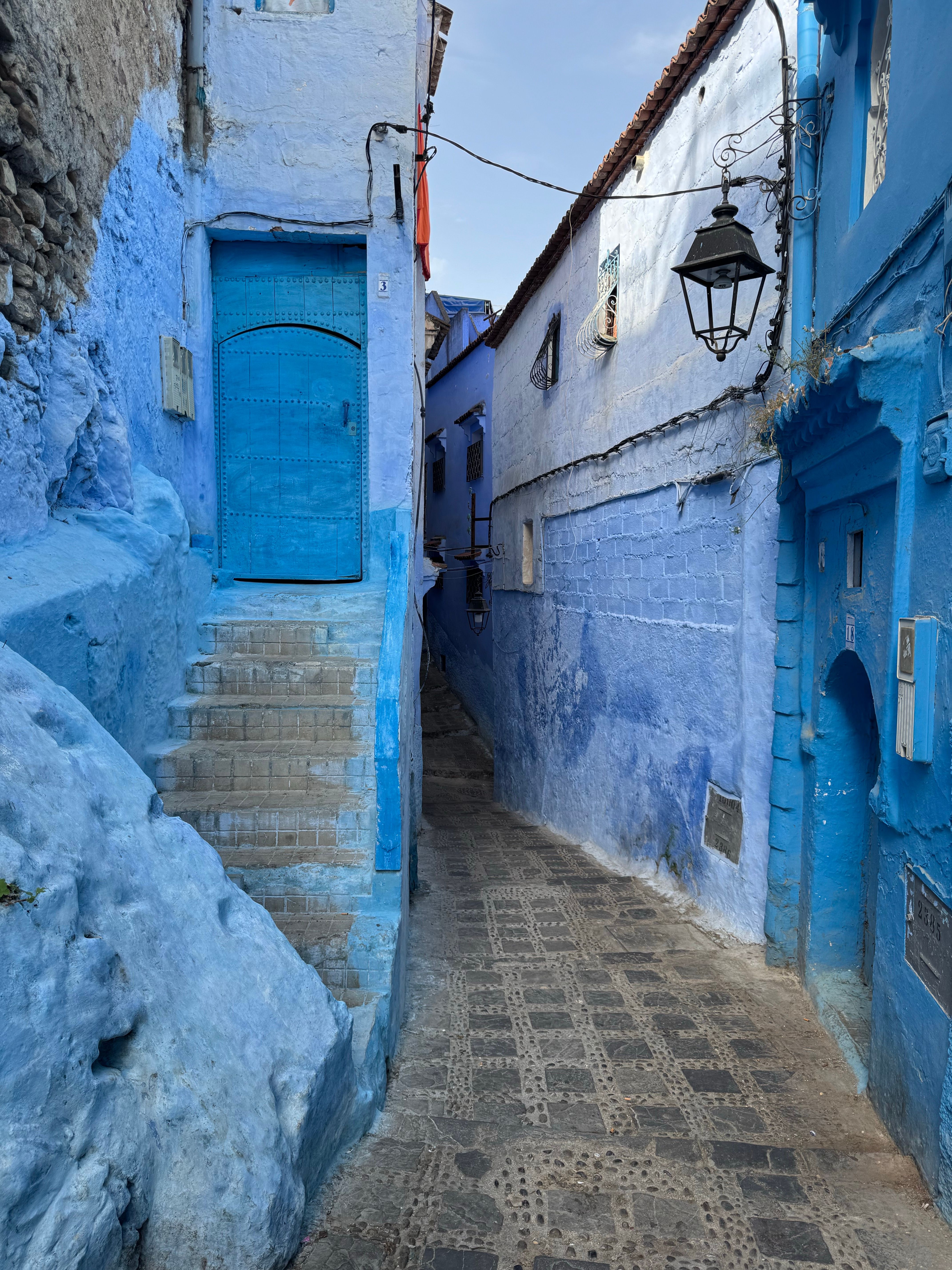
Between the hours of 11:00 AM and 4:00 PM, the medina is besieged by a staggering influx of daily tour buses originating from Fes and Tangier. The most famous alleys—specifically Callejon El Asri with its iconic blue steps—have effectively been converted into open-air photo studios. Enterprising locals now charge a 5 to 10 Dirham toll just to stand in front of highly decorated doorways adorned with prop orange trees and perfectly placed flower pots.
The Journalist's Workaround: The authentic Chefchaouen only reveals itself at dawn. If you step out of your riad at 7:00 AM, the streets belong to you, the street cats, and the local bakers firing up the communal wood ovens. The air is crisp, the chaotic crowds are absent, and you witness the actual mechanics of this ancient mountain town waking up.
Any honest dispatch from Chefchaouen must address the elephant in the room: the region's historic and deeply entrenched hashish (kif) economy. The city serves as the gateway to the Rif Mountains, which is one of the world's largest producers of cannabis.
While cannabis is technically illegal in Morocco, it operates in a heavily tolerated gray area in this specific region. If you are a foreigner, particularly male, you will be approached multiple times a day by locals whispering offers of "smoke" or "hashish" as you navigate the souks. Sometimes the approach is subtle; other times, "guides" will offer to take you to the farms just outside the city limits.
Navigating the Situation: Despite this underground market, the atmosphere rarely feels threatening. There is no violent cartel culture here; it is largely an agricultural commodity passed down through generations. If you do not wish to partake, a firm, polite, and respectful "La, shukran" (No, thank you) with a smile is all that is required. The vendors will immediately respect your boundary and move on. Under no circumstances should you act offended or confrontational—you are a guest in a complex socio-economic ecosystem.
Chefchaouen remains remarkably accessible financially, though prices have crept up due to global social media exposure. The local currency is the Moroccan Dirham (MAD), and cash is absolutely essential—few places deep in the medina accept foreign credit cards. Here is our exclusive financial breakdown:
Budget Backpacker
Hover or Tap for Details 🔄
Budget Breakdown
Basic Dar (Guesthouse) dorms
Street bocadillos & morning baissara soup
Mid-Range Explorer
Hover or Tap for Details 🔄
Mid-Range Breakdown
Private room in a traditional Riad
Family-run restaurants serving Kefta Tagine
Boutique Luxury
Hover or Tap for Details 🔄
Luxury Breakdown
Restored heritage Riad with private Hammam
Multi-course rooftop dining & private tours
If you avoid the cafes situated directly on the main square (Plaza Uta el-Hammam) where prices are inflated for a captive audience, you can easily find a substantial, slow-cooked vegetable or chicken tagine just two streets over for under $6 USD.
Chefchaouen is purposefully isolated. There is no train service, and the closest major airports are Tangier (about 2.5 hours away) and Fes (about 4.5 hours away).
The CTM Bus Network: The most secure and reliable way to arrive is via the government-run CTM bus line. It is highly advised to book these tickets at least 48 hours in advance during the high season, as they frequently sell out. The buses are air-conditioned, reliable, and comfortable.
Grand Taxis: If you miss the bus, you will need to negotiate a seat in a "Grand Taxi" (usually an older Mercedes sedan or a large Dacia). You buy a seat, not the car, meaning the driver will wait until all six passenger seats are filled before departing. It’s cramped, fast-paced, and wildly authentic.
Much of the food surrounding the central plaza is tailored for Western palates—watered down and heavily westernized. To eat like a local, you must wander up the steeper hills toward the medina's residential edges.
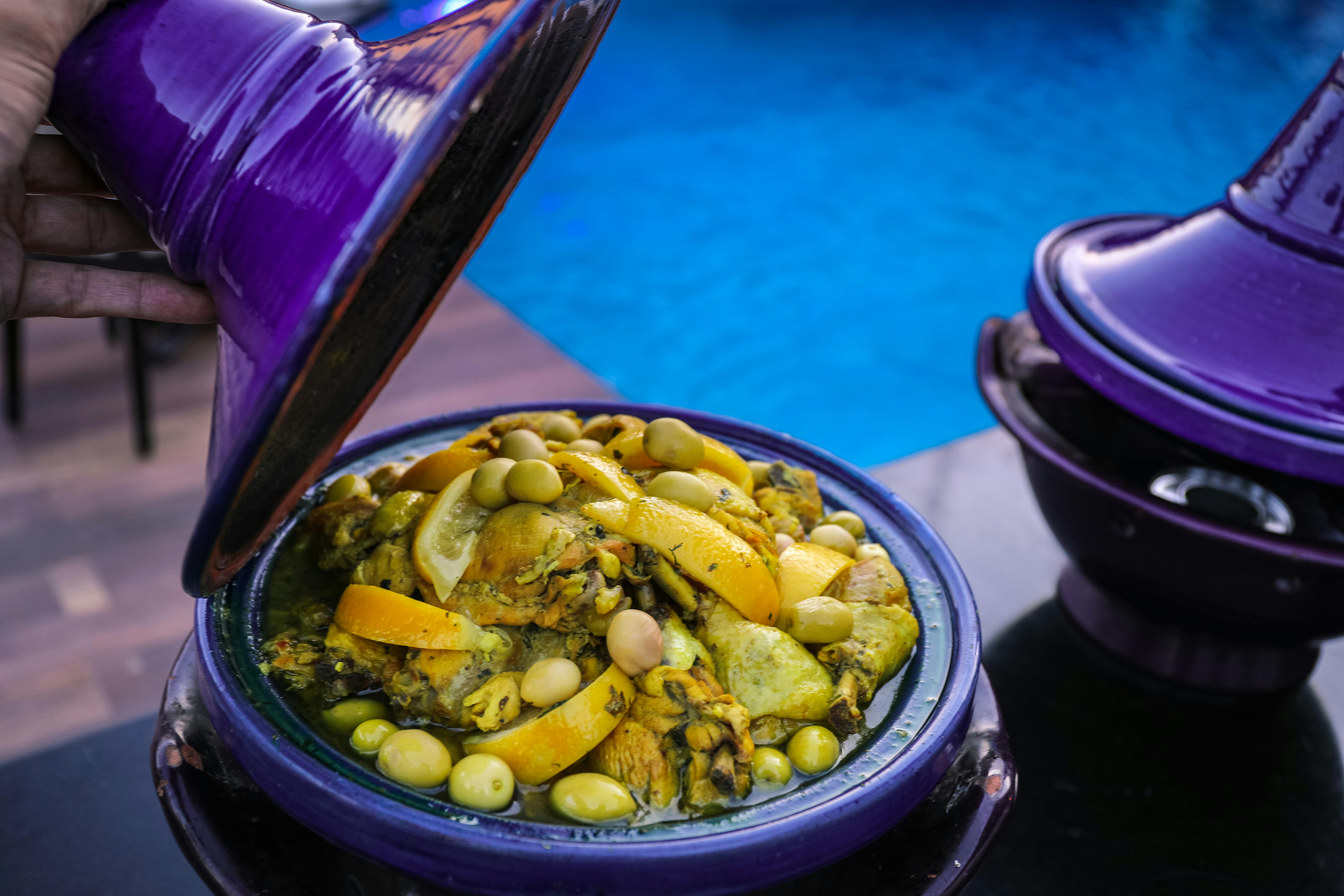
Baissara: Start your morning at a local hole-in-the-wall ordering Baissara, a thick, deeply comforting purée made from split fava beans, generously drizzled with locally pressed olive oil and dusted with cumin and paprika. Served with crusty bread straight from the communal oven (ferran), it costs about $1.50 and will fuel a full day of hiking.
Jben (Goat Cheese): Because of the steep terrain, goats are far more common than cows. Chefchaouen is famous throughout Morocco for its fresh goat cheese. You'll often see women from the surrounding mountains sitting on the edges of the souk selling small, soft rounds of cheese wrapped in palm leaves. It is tart, fresh, and pairs immaculately with local mountain honey.
Ignore the travel agents pushing a 3-hour stopover. To genuinely experience the Blue City, a three-day commitment is necessary.
Day 1: Medina Immersion & The Spanish Mosque
• Morning: Arrive via CTM bus, check into your Riad, and intentionally get lost. The medina is small enough that you can't wander too far without hitting the city walls.
• Late Afternoon: Walk out the eastern gate (Bab el Ansar) along the Ras El Maa waterfall, where locals gather to wash carpets. Begin the 45-minute hike up the hill to the abandoned Spanish Mosque. The structure itself isn't spectacular, but it offers the definitive, sweeping panoramic view of the entire blue medina glowing under the golden hour sun as the call to prayer echoes off the mountain walls.
Day 2: The Akchour Waterfalls Expedition
• Morning: Hire a grand taxi for a 45-minute drive deep into the Talassemtane National Park to hike the Cascades d'Akchour.
• Afternoon: It's a rugged 2-to-3-hour trek alongside a crystal-clear river, crossing makeshift bamboo bridges. The reward is a towering waterfall cascading into a freezing, emerald-green pool. Enjoy a slow-cooked vegetable tagine sitting on plastic chairs right in the shallow river at one of the rustic trailside cafes.
Day 3: Textile Souks and Hammam Cleansing
• Morning: Explore the local artisan shops. Unlike Marrakech, the touts here are incredibly laid back. Chefchaouen is renowned for its thick, hand-woven wool blankets and heavy winter djellabas.
• Afternoon: Visit a local Hammam for a traditional scrub down. Be prepared for a vigorous, no-nonsense exfoliation using black soap (savon noir) that will leave you raw but completely revitalized before catching your bus out.
Responsible journalism requires addressing the friction points of travel. Your behavior in Chefchaouen dictates how the city treats you in return.
⚠️ Cultural Notice: The Ethics of Photography
Chefchaouen has suffered immense fatigue from aggressive tourist photography. Many older locals, particularly women in traditional attire, view being photographed without consent as deeply offensive and a violation of Islamic modesty. We investigated numerous instances of locals shouting at influencers who shoved lenses into their doorways. Treat the medina as a living neighborhood, not a movie set. Never take a portrait without asking. If they say no, accept it immediately.
Dress Code: While Chefchaouen sees thousands of tourists, it remains a conservative, religious mountain town. Walking around the medina in short-shorts, string bikinis, or crop tops is highly disrespectful. Both men and women should aim to keep their shoulders and knees covered to avoid unwanted stares and to show respect to the local culture.
Water Safety: The tap water here comes directly from the mountain springs (Ras el Maa). While locals drink it daily, a foreigner's stomach flora is not adapted to it. Stick strictly to bottled water to avoid ruining your trip with a harsh stomach bug.
Frequently Asked Questions
Yes, Chefchaouen is exceptionally safe. Crime rates are very low compared to larger Moroccan cities like Marrakech or Casablanca. However, you will likely be offered hashish on the streets. A polite but firm 'no thank you' (la shukran) is universally respected.
There is no airport or train station in Chefchaouen. The most reliable method of transport is the CTM bus network. It takes roughly 2.5 hours from Tangier, or 4 to 5 hours from Fes. Private grand taxis are another faster, albeit more expensive, on-the-ground option.
The true origins are heavily debated. Some locals claim it was introduced by Jewish refugees in the 1930s as a symbol of the sky and heaven. Others state it was simply a practical mosquito repellent or a way to keep buildings cool during the harsh Rif Mountain summers.
Generally, older residents and women in Chefchaouen strictly prefer not to be photographed for religious and cultural reasons. Always ask for explicit permission before taking portraits. Sticking to wide architectural shots is the most respectful approach.
While day-trippers rush in for photos and leave, a journalist's recommendation is 2 to 3 full nights. This allows you to experience the medina in the early morning and late evening when the tourist buses are gone, and gives you time to hike the surrounding Akchour waterfalls.
Ready for an Authentic Moroccan Expedition? 🧳
Skip the tourist traps. Uncover exclusive local Riad bookings, transit tickets, and private guided mountain treks.
Access Insider Rates