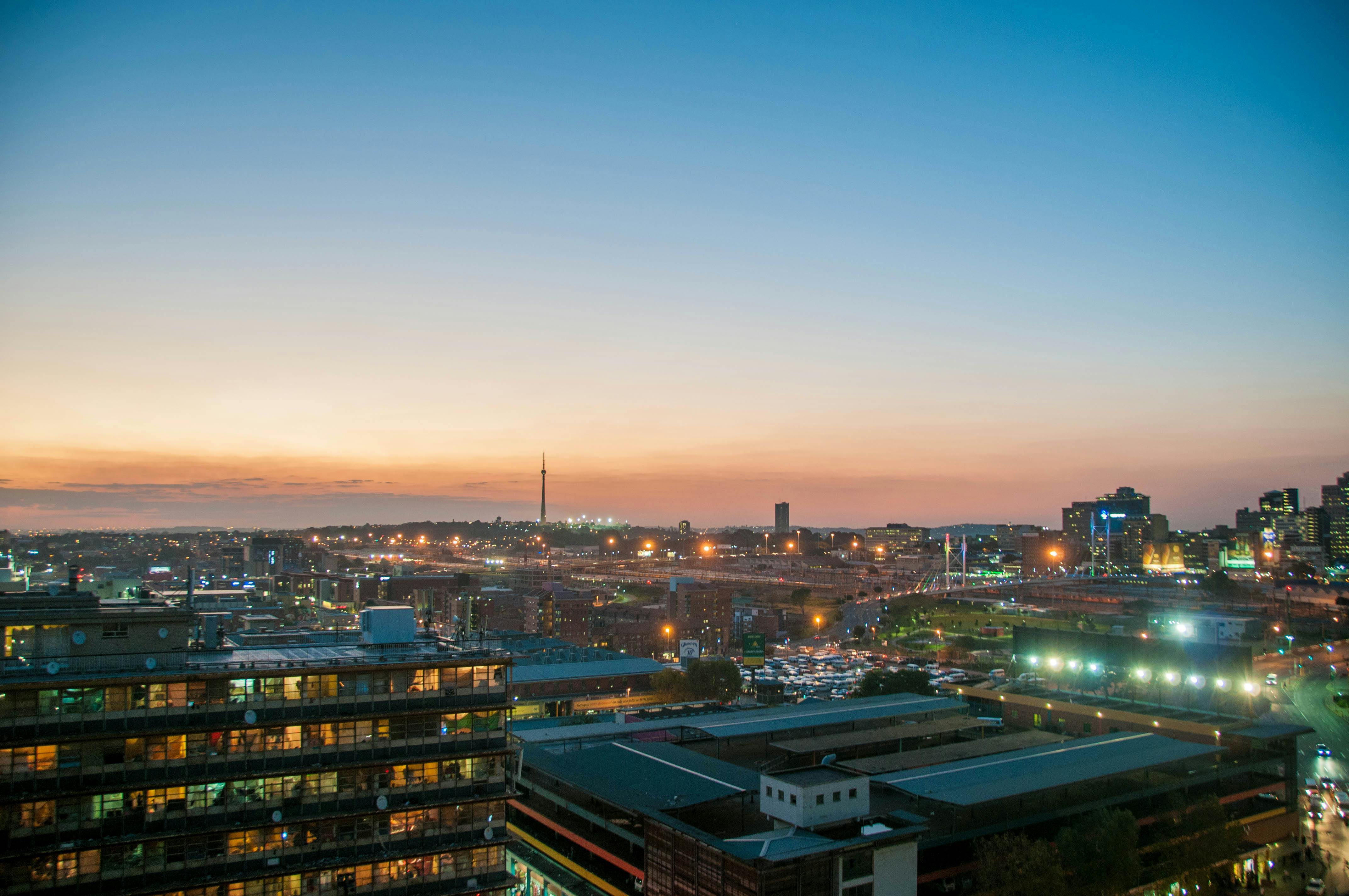
Few cities on earth elicit the degree of visceral apprehension that Johannesburg commands in international travel forums. Long branded by international tabloids as a dystopian, lawless frontier, "Egoli" (the City of Gold) routinely frightens prospective travelers into skipping it altogether—transiting straight through O.R. Tambo Airport to safari lodges in the Kruger or the coastal sanctuary of Cape Town. Yet an on-the-ground investigation uncovers a far more intricate, layered urban reality. Johannesburg is neither an apocalyptic war zone nor a casual European walking capital. It is an immense, hyper-kinetic economic engine governed by deep spatial fragmentation: an archipelago of fortified residential suburbs, private security patrol districts, and hyper-modern business parks, existing alongside neglected inner-city quarters and peripheral informal settlements. Navigating Joburg safely does not require courage; it requires ditching pedestrian assumptions and understanding the city’s complex security ecosystem.
Security Architecture
Private Armed Response > SAPS
Pedestrian Rule
Zero Nighttime Walking Citywide
Secure Transit
Gautrain High-Speed Rail Network
Grid Risk
Load Shedding Darkens Intersections
"Johannesburg cannot be understood through a single crime statistic. It is a city of invisible borders, where one street separates multimillion-dollar gated estates under private sniper towers from abandoned high-rises run by criminal syndicates. Spatial awareness here is an essential discipline."
South African Police Service (SAPS) crime releases routinely paint a sobering statistical picture: homicide, armed carjacking, and aggravated robbery metrics consistently rank among the highest worldwide for non-warzone nations. However, treating these figures as evenly distributed across the Gauteng province is fundamentally misleading.

The Micro-Geographic Distribution: The overwhelming majority of violent interpersonal crime is geographically concentrated in high-density, under-policed townships (such as Diepsloot, Alexandra, and parts of Soweto) and derelict inner-city corridors (Hillbrow, Berea, and central CBD). In these neighborhoods, high poverty, gang wars, and lack of social services create volatile conditions.
Conversely, the affluent northern suburban belt—stretching from Rosebank, Parkhurst, and Saxonwold up to Sandton and Melrose Arch—operates under an entirely privatized security net. Here, violent crime rates against international travelers are comparable to those in major North American urban centers, provided you follow standard precautions against opportunistic street theft.
To survive and thrive in Johannesburg, a visitor must understand how the city's built environment adapted to decades of public policing shortfalls. In response to state law enforcement gaps, the private security industry expanded rapidly, outnumbering the police force more than four to one nationwide.
Boomed Streets & Neighborhood Fortresses: Residential areas throughout northern Johannesburg operate under "boomed access control." Entire neighborhoods close off side streets with heavy steel drop-down gates, automatic license-plate scanners (ALPR), and 24-hour manned guardhouses. Private companies like CAP (Community Active Protection) and Fidelity ADT run fleets of tactical response vehicles that patrol these zones continuously.
Inside these boomed perimeters, residents jog with dogs, push strollers, and patronize sidewalk cafes with a sense of security rarely visible from the exterior highway walls. The baseline rule: always verify that your lodging lies within an actively patrolled or access-controlled security precinct.
Selecting where to sleep in Johannesburg is an operational safety choice that defines your experience. The city changes drastically within a 5-minute drive:
Northern Sanctuaries
Hover or Tap for Audit 🔄
Security Profile
Rosebank, Sandton, Melrose Arch, Parkhurst
Gautrain rail terminals, walk-friendly shopping plazas, armed patrol presence
Creative Urban Nodes
Hover or Tap for Audit 🔄
Security Profile
Maboneng Precinct, Victoria Yards, Braamfontein
Vibrant daytime art and market culture; boundary lines decay into high-crime streets immediately past perimeter blocks
Inner-City Red Zones
Hover or Tap for Audit 🔄
Security Profile
Hillbrow, Berea, Yeoville, Central CBD core
Zero solo unguided foot movement under any circumstance; hijacked high-rises and high armed street robbery rates
The Editorial Verdict: Base your stay in Rosebank. It offers a walkable commercial core anchored by high-end shopping galleries, leafy residential boulevards, a central Gautrain underground station, and lower security tension than Sandton’s corporate skyscrapers.
Your choice of transport is your primary line of defense. The physical layout of Johannesburg was deliberately designed during the apartheid era to isolate communities across vast distances, making private vehicular transit mandatory.

The Gautrain: Built ahead of the 2010 FIFA World Cup, the Gautrain is clean, fast, and heavily guarded. Its stations feature turnstiles with continuous CCTV coverage, dedicated armed security teams, and clean modern trains. It connects OR Tambo International Airport directly to Sandton in 15 minutes, bypassing the infamous R24 highway traffic.
Uber Black & Ride-Hailing: Uber operates widely across Johannesburg, but requires practical ground rules:
• Never wait on an open street corner with your phone held out in your hand. Request your ride while inside a secured building, lobby, or restaurant.
• Verify the vehicle license plate, make, model, and driver identity before opening the door.
• Keep car doors locked and windows rolled up at intersections to guard against opportunistic smash-and-grab thefts.
• Avoid informal commuter minibus taxis; they lack basic safety oversight, navigate erratically, and operate under turf disputes that occasionally spark armed conflict.
Safety in South Africa is tied directly to the national power utility, Eskom. "Load shedding"—scheduled rolling blackouts intended to protect the national electric grid from collapse—creates concrete security risks that many international travelers fail to factor in.
The Ripple Effect of Blackouts:
• Traffic Lights ("Robots") Fail: When power cuts to an urban block, traffic signals shut down. Key intersections immediately turn into four-way stop bottlenecks, significantly increasing vulnerability to smash-and-grab street crime during peak congestion hours.
• Cellular Network Degradation: During prolonged Stage 4 to 6 load shedding, backup batteries at cellular towers drain, leaving entire neighborhoods without reliable 4G/LTE mobile data. Losing navigation access mid-transit in an unfamiliar district is a major hazard.
• Residential Perimeter Breaches: Home alarm transmitters, electronic gates, and electric fence systems lose line power, forcing private security teams to focus on constant false alarms.
Survival Workaround: Always confirm your accommodation features a backup diesel generator or high-capacity solar inverter system with battery storage. Download offline Google Maps for all of Gauteng, and keep a fully charged 20,000mAh power bank in your daypack at all times.
Skipping Johannesburg means missing the true cultural, intellectual, and economic pulse of contemporary Africa. With the right security framework in place, this three-day itinerary unlocks the city's rich creative soul:
Day 1: Contemporary Culture & Constitutional Legacy
• Morning: Begin at Constitution Hill in Braamfontein. Explore the Old Fort prison complex where Nelson Mandela and Mahatma Gandhi were both incarcerated, and tour the Constitutional Court built inside the ruins of the prison exercise yard.
• Afternoon: Take an Uber to Rosebank for lunch at Keyes Art Mile. Browse world-class pan-African contemporary art at the Goodman Gallery and the Everard Read gallery.
• Evening: Dine at 4th Avenue in Parkhurst—one of Joburg’s rare boomed, walkable strips filled with neighborhood bistros and wine bars.
Day 2: Soweto Infiltration (With an Insider Guide)
• Full Day: Do not attempt to drive Soweto solo without local connections. Book an accredited local-led cycling or walking tour through Vilakazi Street in Orlando West—the only street on earth that was home to two Nobel Peace Prize laureates (Nelson Mandela and Archbishop Desmond Tutu).
• Visit the Hector Pieterson Memorial Museum to understand the student-led 1976 uprisings, followed by a meal of traditional shisa nyama (wood-fired barbecue) paired with local chakalaka.
Day 3: Origins of Humanity & Highveld Sunset
• Day: Hire a private driver to venture 45 minutes northwest to the Cradle of Humankind (Maropeng and Sterkfontein Caves), a UNESCO World Heritage Site home to some of the oldest hominid fossils ever excavated.
• Dusk: Return to Sandton or Rosebank for sunset drinks overlooking the sprawling jacaranda canopy of Johannesburg’s urban forest.
While careful planning eliminates the vast majority of threats, you should always know how to respond if confronted in a robbery or vehicle encounter.
⚠️ The Golden Rule: Complete Non-Resistance
In South Africa, criminals who draw a weapon are ready to use it. Armed robberies become deadly almost exclusively when targets resist, argue, or attempt to defend phones, wallets, or vehicles. Surrender material belongings without hesitation. Keep hands raised, avoid sudden movements toward pockets or bags, avoid confrontational eye contact, and speak calmly. No smartphone or passport is worth your life.
Highway Smash-and-Grab Awareness: When stopping at traffic lights or highway off-ramps (notably the M1 and Crown Mines interchanges), leave a full car length between your front bumper and the vehicle ahead. This ensures an escape route if approached. Keep bags, purses, and shopping items hidden in the trunk, out of sight from passing pedestrians.
Emergency Contacts: South Africa's national police dispatch number is 10111 from landlines or 112 from any mobile device. For medical emergencies requiring private evacuation and rapid paramedic response, call Netcare 911 (082 911) or ER24 (084 124). Always travel with high-coverage emergency medical and evacuation insurance.
Frequently Asked Questions
Yes, provided you abandon standard pedestrian habits and operate with localized spatial awareness. Johannesburg is not an open walking city like London or Tokyo; it is an archipelago of heavily fortified, privately secured suburbs connected by vehicular transit corridors. Travelers who base themselves in secured northern districts (Rosebank, Sandton, Melrose Arch) and rely exclusively on door-to-door transit face low rates of violent crime.
Independent, unguided walking through the Central Business District (CBD), Hillbrow, Berea, and Yeoville is categorically unadvised due to rampant street muggings and hijacked infrastructure. However, guided walking tours led by accredited local fixers—such as those operating in Newtown, Constitution Hill, or parts of Maboneng during daylight hours—are safe and provide critical historical context.
Load shedding cuts municipal power across scheduled suburban blocks, disabling streetlights, perimeter electric fences, alarm transmission towers, and intersection traffic signals ('robots'). When traffic lights fail, intersections become hotspots for smash-and-grab vehicular crime. Travelers must select hotels equipped with full diesel generators and avoid driving through unlit districts after dark.
The Gautrain rapid-rail system is the gold standard of transit security. It operates on an elevated, biometrically patrolled rail viaduct connecting OR Tambo directly to Sandton, Rosebank, and Pretoria. If traveling with heavy luggage after 8:30 PM, pre-arranged private chauffeur services or app-verified Uber Black pick-ups inside the terminal parking structure are far safer than unmetered street taxis.
Zero resistance is the golden rule of survival. Violent crimes in South Africa turn lethal almost exclusively when victims hesitate, scream, argue, or attempt to defend material possessions. Keep your hands visible, make no sudden movements, surrender your smartphone and watch immediately without making aggressive eye contact, and speak in a calm, compliant tone.
Navigate Johannesburg with Precision 🇿🇦
Travel smart. Reserve secure private airport transfers, accredited historical Soweto excursions, and vetted boutique stays in protected northern suburbs.
Book Gautrain Transfers & Vetted Tours