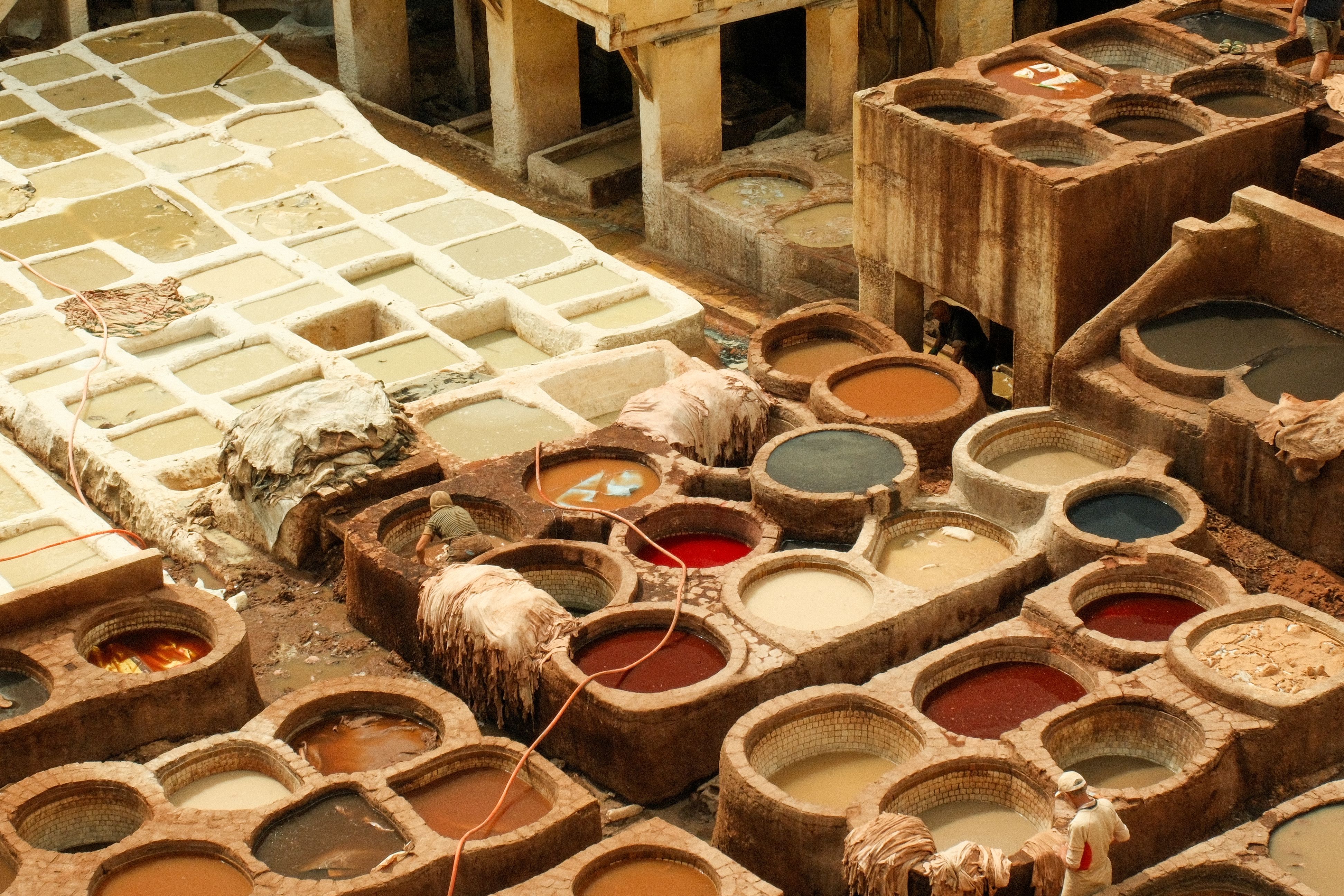
The Chouara Tannery’s honeycomb of colored dye pits is arguably Fez’s most virally photographed site. Open any travel brochure, and you will see stunning aerial views of vibrant indigo, saffron, and poppy-red vats contrasting against the earth tones of the ancient Moroccan medina. Yet, an on-the-ground investigation reveals a starkly different sensory and ethical reality. Beneath the curated Instagram veneer lies a harsh environment of grueling physical labor, pungent ammonia, and centuries-old processing methods. Almost nobody asks what the working conditions in those pits actually are when they lean over the viewing terraces. This dispatch strips away the tourist gloss, offering an unfiltered look at the complex socio-economic engine of Fez, the truth behind the "free" terrace views, and how conscious travelers can navigate this ethical dilemma without contributing to exploitation.
Location Matrix
Deep in Fez el-Bali
Sensory Reality
Intense (Pigeon Guano & Lime)
Ethical Stance
Observe with high awareness
The Shadow Economy
Shop fronts acting as gatekeepers
"It's one of the most photographed sights in Fez, and arguably one of the least examined. To truly witness the tannery is to confront the immense physical toll required to produce the luxury leather goods we so casually purchase."
Let’s set the scene with brutal honesty: the smell hits you blocks before you arrive. The Chouara Tannery (the largest and oldest of the three in Fez) operates today almost exactly as it did in the 11th century. The methods are entirely manual, utilizing no modern machinery.
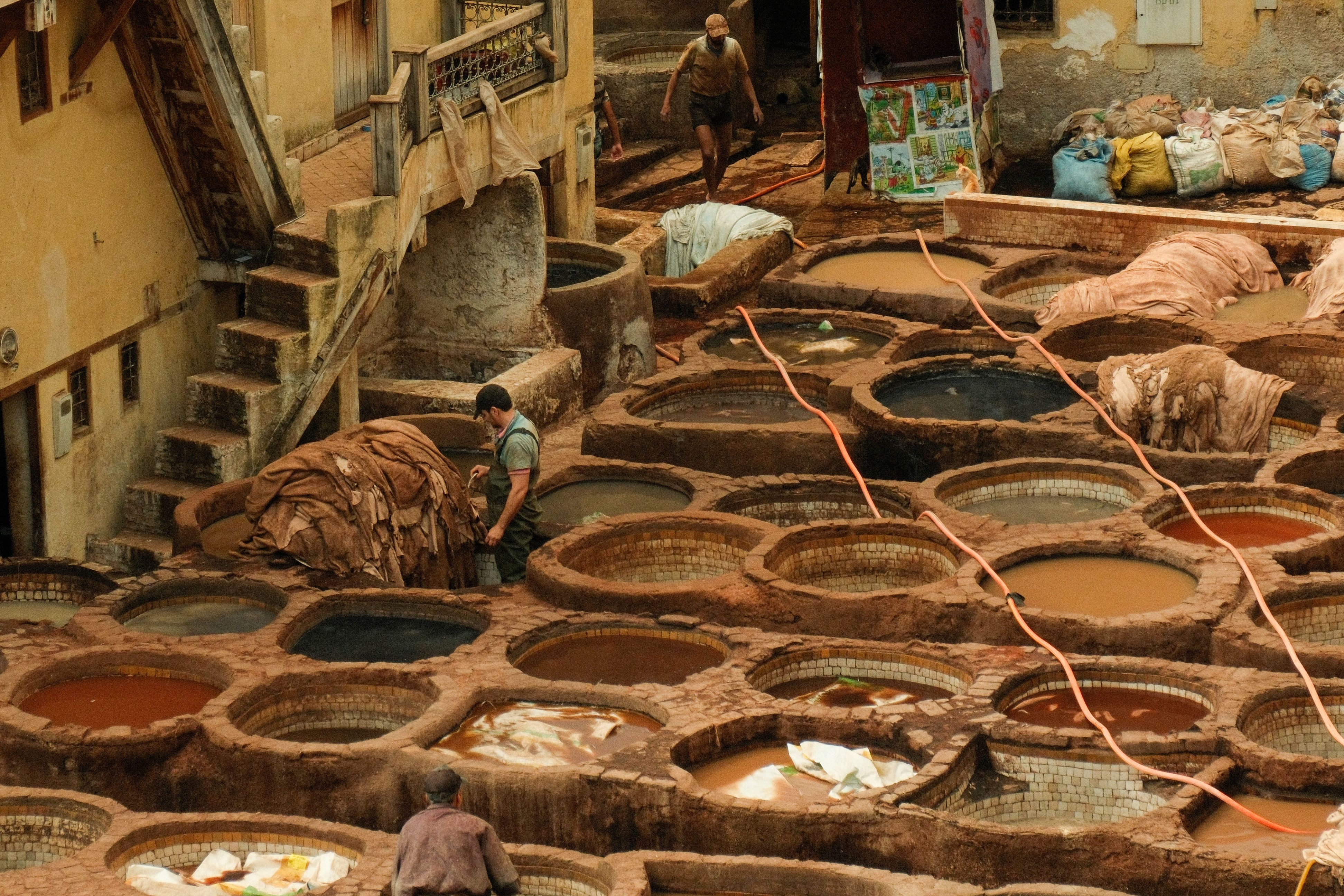
The process begins in the white vats, where cow, sheep, goat, and camel hides are soaked in a harsh mixture of cow urine, quicklime, water, and salt. This breaks down the tough leather and strips away hair. Following this, the hides are transferred to the brown vats, where they are softened using a paste made primarily of pigeon guano (feces). The ammonia in the guano acts as a natural softening agent, rendering the hides malleable enough to absorb the dye.
The Labor Toll: Men stand waist-deep in these caustic liquids under the relentless North African sun. They use their bare legs and feet to knead the skins for hours at a time. The physical degradation is immense. The romanticized photos taken from the breezy terraces completely crop out the sweat, the hazardous exposure, and the backbreaking reality of this artisanal economy.
You cannot simply walk up to the edge of the Chouara Tannery. The entire perimeter is walled off and heavily monopolized by multi-story leather shops. These shops control the "balconies," meaning your view of this ancient site is strictly commodified.
As you approach the area, you will be swarmed by men handing you a sprig of fresh mint—ostensibly to mask the overwhelming odor—and ushering you up a dark staircase. What follows is a highly choreographed sales funnel. You are allowed 5 to 10 minutes on the terrace to snap your photos, after which you are strategically guided down through several floors of leather jackets, poufs, and bags.
The Journalist's Workaround: Acknowledge the transaction for what it is. The view is not free. If you do not intend to buy a $200 leather jacket, be upfront. Upon exiting, hand the shopkeeper or the "guide" a 10 or 20 MAD (Moroccan Dirham) note. Say firmly, "Thank you for the view, I am not shopping today." This compensates them for the terrace access and usually diffuses the aggressive sales pitch.
If you choose to participate in the local economy, understand that the initial asking prices in the tannery shops are massively inflated—often marked up by 300%. Haggling is not optional; it is expected. Here is our exclusive financial breakdown of how to engage ethically:
The Observer
Hover or Tap for Details 🔄
Observer Cost
10-30 MAD tip to the shopkeeper for the view and the mint sprig.
Politely declining high-pressure sales tactics.
Artisan Supporter
Hover or Tap for Details 🔄
Souvenir Audit
Purchasing an authentic goat-leather wallet, belt, or traditional babouche slippers.
Counter offering at 40% of the initial asking price.
Bespoke Buyer
Hover or Tap for Details 🔄
Luxury Investment
Camel or sheep leather jackets, often tailored overnight.
Hiring a licensed guide to bypass the touts and ensure quality assurance.
Warning: Check the aroma of the leather before buying. If it retains a strong, pungent ammonia smell, it wasn't cured properly. Quality Fez leather should smell earthy and natural.
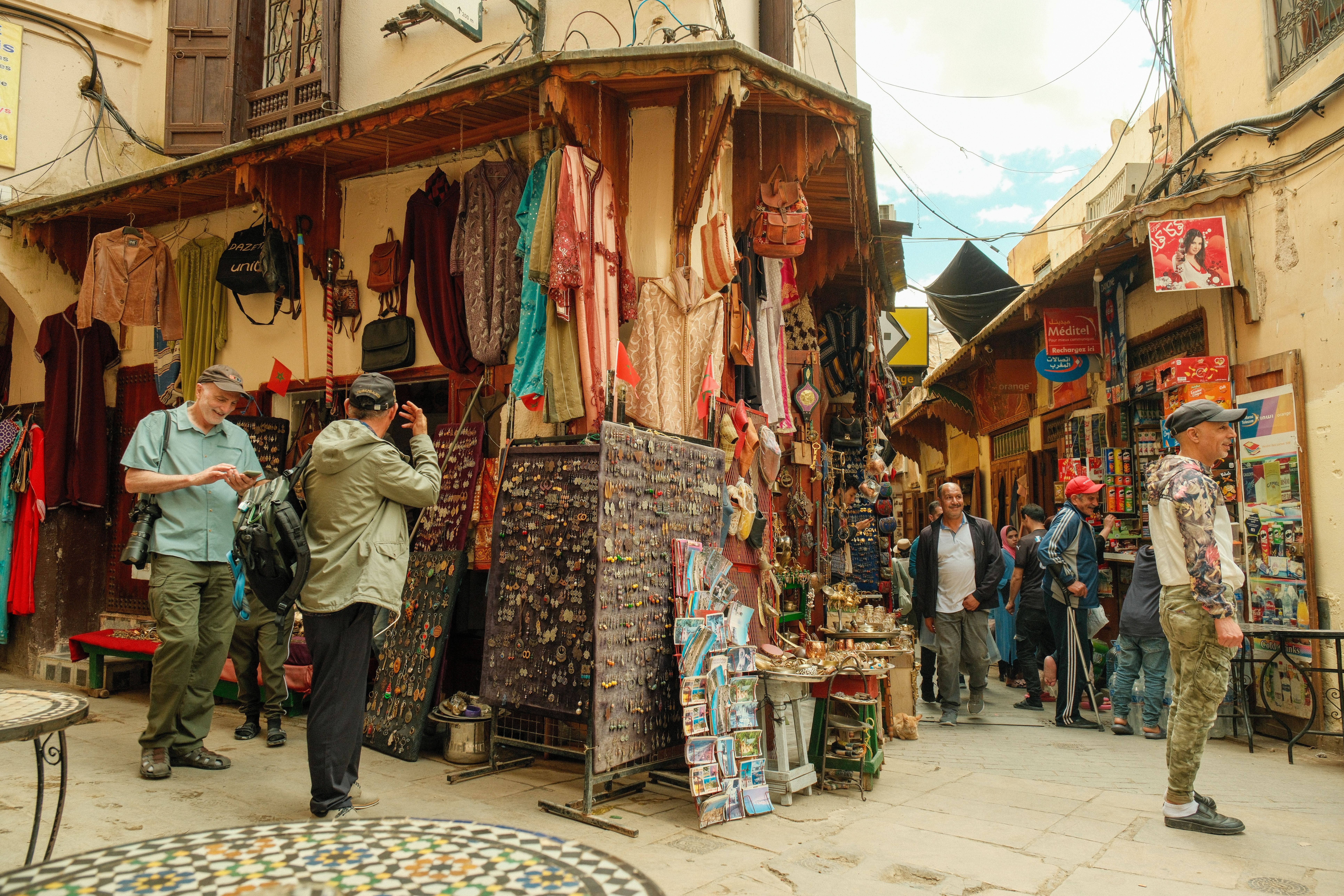
Fez el-Bali is the world’s largest car-free urban area, consisting of over 9,000 winding, unmarked alleyways. Google Maps is notoriously unreliable here; your blue GPS dot will bounce wildly off the high medieval walls.
The "Faux Guide" Hustle: As you get closer to the tanneries, young men will inevitably approach you claiming the road is "closed," "blocked for prayer," or that they can take you to a "free" view. This is the oldest scam in Fez. Ignore them, keep walking confidently, or simply look up—there are small wooden signs pointing toward "Tanneurs" scattered on the walls.
Travel journalism requires us to ask hard questions. Are we treating laborers as a human zoo by paying to watch them toil in hazardous conditions?
The truth is complex. The tanneries are not a tourist attraction designed for foreigners; they are the industrial backbone of Fez. The men in the pits belong to deeply respected, centuries-old artisan guilds. Boycotting the tanneries does not improve their working conditions—it simply starves the local economy of capital.
To visit ethically is to shift your mindset. Put the camera down for a moment. Ask your guide direct questions about the cooperative structure and how the workers are compensated. Treat the visit as an educational observation of a resilient trade, rather than merely securing a backdrop for your social media feed.
Your behavior on the ground dictates how the city interacts with you. Navigate the tanneries with these non-negotiable guidelines:
⚠️ Cultural Notice: The Ethics of Photography
Do not use telephoto lenses to zoom in on the exhausted faces of the tannery workers. They are trying to earn a living, not perform for your lens. Stick to wide, architectural shots of the vats themselves. If you are interacting directly with an artisan inside a shop, always ask for explicit verbal permission before taking a portrait.
Footwear: The alleyways directly surrounding the tanneries are frequently slick with water, dye runoff, and animal byproducts carried on donkey carts. Do not wear sandals or open-toed shoes.
The Official Guide Advantage: If you are overwhelmed by the prospect of navigating the medina's touts, hire an official, badge-carrying guide. They cost roughly 300 to 500 MAD for a half-day. Not only will they provide rich historical context, but their presence acts as an impenetrable shield against street hustlers.
Frequently Asked Questions
Yes, as a genuine piece of Fez's traditional economy. However, it should be approached with an awareness of the grueling labor conditions involved rather than as just a colorful photo backdrop.
No. While most terrace access is arranged informally through adjoining leather shops, you are under no strict obligation to buy. Leaving a small tip (10 to 20 Dirhams) for the viewpoint is a respectful alternative.
The smell is intensely pungent. The traditional tanning process uses cow urine and pigeon guano (ammonia) to soften the hides. You will usually be handed a sprig of fresh mint at the entrance to hold under your nose, which significantly helps.
Early to mid-morning is optimal. The dye vats are freshly filled, the workers are highly active, and the midday sun hasn't yet amplified the visceral odors of the processing pits.
Fez el-Bali is a labyrinth of 9,000 alleyways, and getting lost is inevitable. While generally safe from violent crime, aggressive 'faux guides' will approach you offering to show you the tanneries. A firm 'no' is required, or better yet, hire a licensed official guide.
Plan This Expedition 🧳
Skip the tourist traps and street hustlers. Uncover highly-rated guided medina tours and verified heritage Riad stays.
Find Expert Tours Check Riad Stays