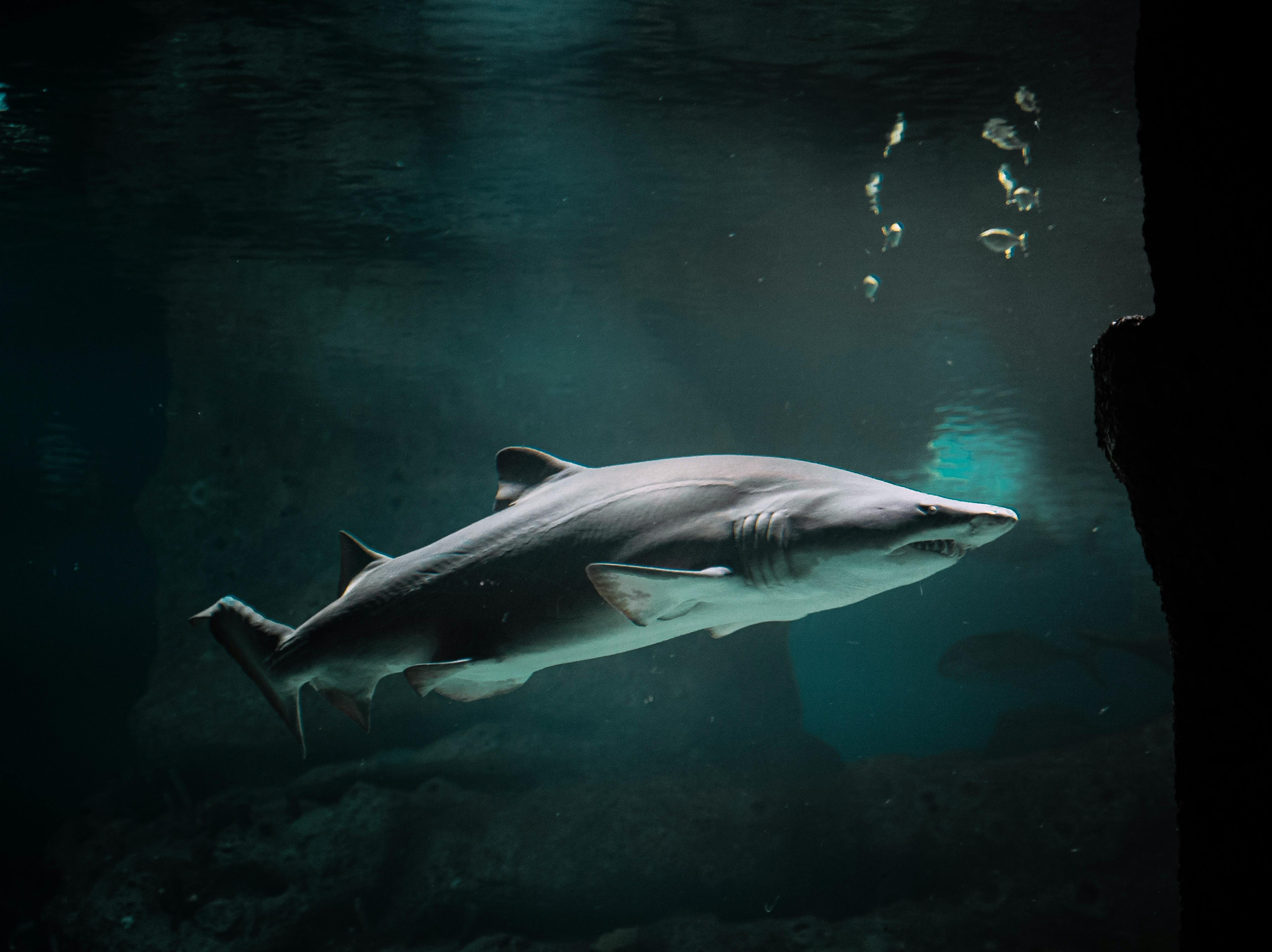
Few commercial adventures are as commercially codified—and ecologically contested—as the shark cages of Gansbaai. Two hours southeast of Cape Town, where the Atlantic’s Benguela current collides with the Agulhas banks, sits Kleinbaai harbor: the global ground zero of commercial white shark encounters. For decades, brochure marketing promised close-quarters confrontation with the apex ocean carnivore, Carcharodon carcharias, inside submerged steel boxes. But our field investigation reveals an industry caught in radical, high-stakes transition. A systemic ecological disruption—spearheaded by rogue orca pods hunting sharks for their nutrient-dense livers—has fundamentally rearranged the marine hierarchy. Concurrently, intensifying friction between academic marine biologists, municipal authorities, and commercial tour operators has thrust the ethics of chumming into the spotlight. Is this industry an indispensable funding engine for pelagic survival, or an invasive commodification of an apex predator on the brink?
Current Primary Encounter
Bronze Whalers (*C. brachyurus*)
Water Thermal Profile
12°C – 16°C (7mm Wetsuit Mandatory)
Epicenter Coordinate
Shark Alley / Dyer Island Reserve
Regulatory Framework
DEFF Permitted Chum Limits
"Cage diving in Gansbaai was built on the myth of absolute Great White supremacy. When two orcas proved that myth wrong in a single season, the industry was forced to abandon theater and reckon with actual marine biology."
For twenty-five years, Gansbaai's municipal identity was inseparable from the Great White. The shallow channel separating Dyer Island from the 60,000-strong Cape fur seal colony at Geyser Rock—notoriously dubbed "Shark Alley"—represented the densest population of white sharks on Earth. That reality unraveled with surgical speed starting in 2017.
The Port and Starboard Factor: The disruption arrived in the form of two coastal male killer whales (Orcinus orca), identifiable by their collapsed dorsal fins. Operating as a hyper-specialized tactical hunting pair, these apex cetaceans systematically hunted sub-adult white sharks, tearing open their pectoral girdles with acoustic-guided precision to extract their squalene-rich livers while discarding the remaining carcass.
The biological fallout was immediate. White sharks utilize chemical flight signals; necrohormones released into the water column trigger instantaneous flight responses. When white sharks abandon a littoral territory under orca pressure, they do not return for months, sometimes years.
The Bronze Whaler Displacement: In their absence, a secondary mesopredator stepped in: the Bronze Whaler, or copper shark. These robust, schooling pelagics, measuring up to 3.3 meters, previously avoided the shallows of Dyer Island to escape predation by white sharks. Today, nearly 90% of all "shark cage encounters" logged out of Kleinbaai are Bronze Whalers. Any operator marketing unconditional, daily Great White encounters is peddling legacy fiction.
The core ethical lightning rod of the cage-diving trade remains chumming: the practice of ladling a slurry of crushed sardines, fish oil, and sea water into the current to create an olfactory track stretching hundreds of meters offshore.
The Argument from Critics: Opponents argue that decades of concentrated chumming off Danger Point have conditioned sharks through Pavlovian association: engine frequencies and human silhouette equals food. Critics contend this altered behavioral baseline heightens risk for surfers, abalone divers, and spear-fishers along the Western Cape corridor.
The Scientific Counter-Audit: Longitudinal acoustic telemetry data published by South African marine scientists paints a radically different picture. Unlike conditioning programs where predators receive a caloric reward, professional cage diving employs an olfactory stimulant without feeding.
The bait line (usually a frozen tuna head fastened to a natural fiber rope) is pulled away the second a shark lunges, denying physical ingestion. Electronic tag data demonstrates that white sharks rarely linger at tour boats for more than a few hours before resuming standard migratory hunting patrols. Still, sloppy operators who let sharks strike the bait run afoul of the Department of Environment, Forestry and Fisheries (DEFF) regulations.
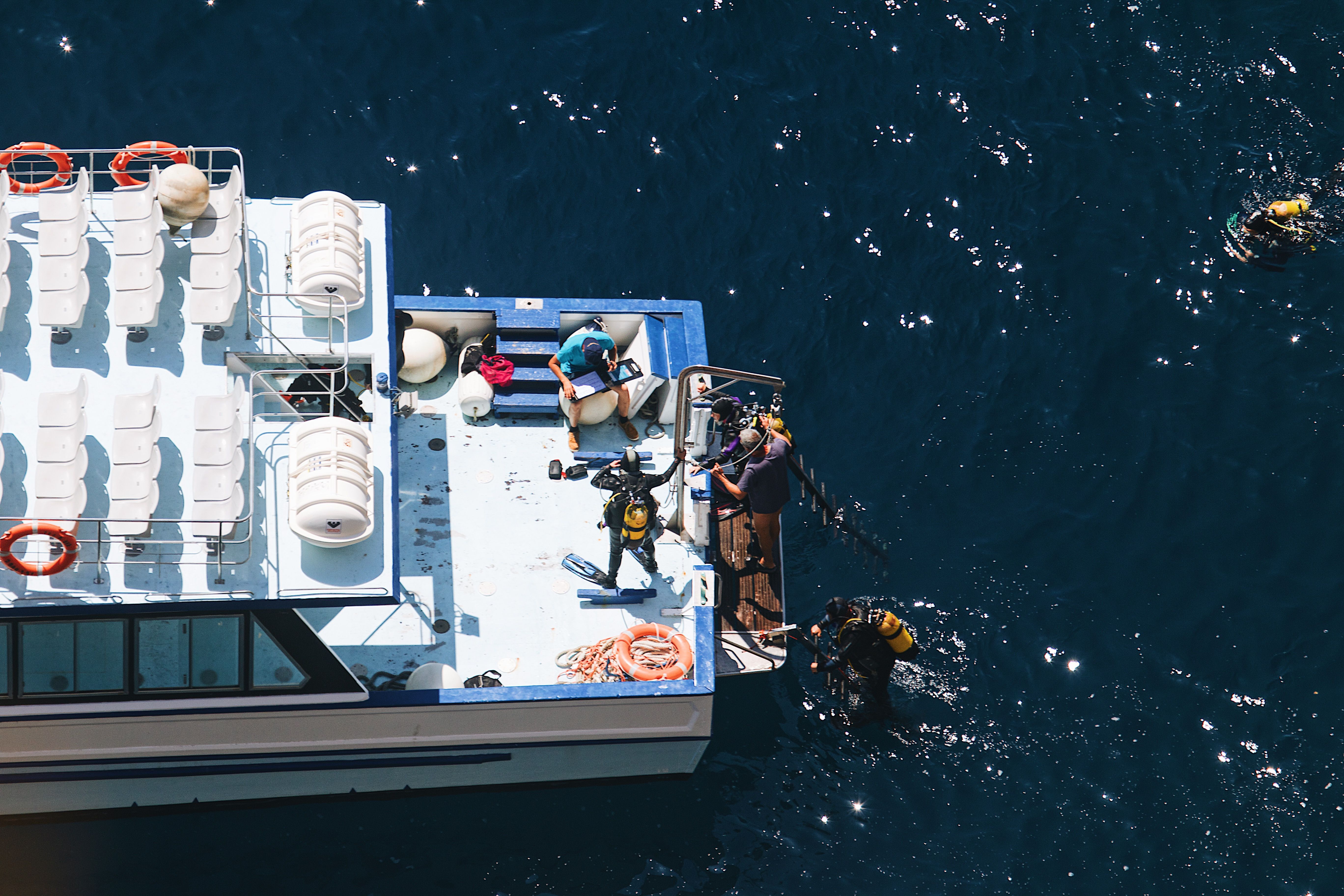
Prices in Gansbaai fluctuate depending on operator credentials, vessel capacity, and onboard scientific engagement. Operating a specialized, twin-hull marine catamaran with survey-grade steel cages in treacherous Atlantic swells incurs substantial overhead. Here is our field assessment:
High-Density Day Hopper
Hover or Tap for Audit 🔄
Commercial Tier Audit
30 to 40 tourists packed onto double-deck hulls
Strict 15-minute intervals; minimal educational interaction
Eco-Charter & Research Vessel
Hover or Tap for Audit 🔄
Research Tier Audit
Led by resident marine biologists logging dorsal fin ID data
25 to 40 minutes in-cage; funds Dyer Island Conservation Trust
Private Biological Expedition
Hover or Tap for Audit 🔄
Private Charter Audit
Entire catamaran reserved; zero time limits inside the cage
Custom pelagic tracking, high-end macro photography, bespoke route
Field Warning: Never book through generic Cape Town third-party brokers without verifying the actual operating vessel out of Kleinbaai. "Budget" packages often tack on hidden rental fees for 7mm neoprene wetsuits, booties, or foul-weather jackets, and leave you shivering on an exposed lower deck while paying passengers rotate.
Kleinbaai harbour is not a tranquil marina. It is a narrow, surge-swept concrete slipway blasted directly out of jagged limestone rock plates. Catamarans are launched and retrieved using customized John Deere industrial tractors back-reversing trailers through churning surf.

The Physical Reality of the Benguela: The sea state around Dyer Island is dictated by massive Southern Ocean swells running unimpeded across thousands of nautical miles. If you have any susceptibility to motion sickness, the violent, rhythmic pitch of a dual-hull boat tied off to an anchor line while diesel fumes mix with sardine oil will quickly overwhelm you.
Pre-Departure Protocol: Pharmaceutical-grade meclizine or hyoscine patches applied 12 hours prior to departure are virtually non-negotiable. Once the boat leaves the Kleinbaai cut, captains cannot return to shore to drop off seasick passengers without aborting the four-hour expedition for all participants.
To view Gansbaai merely as a cage-diving factory is to misunderstand the deep, fraught socio-economic ecology of the Overberg coastline. Long before ecotourists arrived, Gansbaai was a hardened Afrikaans and Khoisan fishing village operating against a backdrop of violent sea conditions.

The Underground Abalone Economy: Running parallel to legitimate marine charters is the illicit trade in perlemoen (wild abalone). Driven by organized syndicates trafficking to East Asian luxury markets, the reefs surrounding Dyer Island have witnessed armed standoffs between poaching cartels and maritime anti-poaching units. The presence of commercial shark boats in Shark Alley operates as an accidental, highly effective surveillance deterrent against illegal daytime stripping of the rocky seabed.
Local Palate: After enduring 14°C ocean immersion, the local gastronomic recovery is defined by warm coastal comfort food. Sample traditional pickled fish, pan-seared Kingklip, or fresh black mussels steamed in white wine from the neighboring cool-climate Elim wine ward—famous for flinty, maritime-influenced Sauvignon Blancs grown in shale-rich soils.
Rushing from Cape Town for a same-day cage dive and instantly driving back is an amateur logistical error. The coastal weather window requires calculated strategic flexibility. Deploy this operational schedule:
Day 1: The Coastal Infiltration (R44 & De Kelders)
• 08:00 AM: Bypass the inland N2 highway. Take the spectacular, cliff-hugging R44 Clarence Drive route past Betty's Bay to view the African penguin colony at Stony Point.
• 02:00 PM: Arrive at De Kelders, the limestone cliff line flanking northern Gansbaai. Between June and November, deep marine trenches allow Southern Right Whales to nurse calves within 30 meters of the rocky shoreline.
• 06:30 PM: Check into your coastal guesthouse; complete pre-dive medical sign-offs with your dive operation to secure early launch status.
Day 2: The Pelagic Deployment (Dyer Island System)
• 06:30 AM: Mandatory crew briefing at the Kleinbaai slipway. Review the morning's ocean surface charts and weather satellite feed.
• 08:00 AM – 12:30 PM: Live operations at sea. Expect two to three hours on station at the anchor line. Even if Great Whites remain elusive, expect close-contact encounters with high-velocity Bronze Whalers, Cape fur seals, and giant pelagic petrels.
• 03:00 PM: Tour the African Penguin and Seabird Sanctuary (APSS) in Gansbaai to inspect rehabilitation pipelines for birds injured by plastic pollution or commercial longline fisheries.
Day 3: The Danger Point Reconnaissance & Elim Wineries
• 09:00 AM: Hike out to the Danger Point Lighthouse, the historic site where the HMS Birkenhead sank in 1852 (giving birth to the maritime protocol of "women and children first").
• 01:00 PM: Drive 20 minutes inland toward Elim to experience local heritage architecture, thatched missionary cottages, and some of the country's most mineral-dense, coastal vineyard profiles before returning to Cape Town.
Not all eight commercial permits operating out of Kleinbaai conduct themselves with equal scientific integrity. Your capital directly finances the methodology practiced on the water.
⚠️ Ethical Inspection Checklist
Before confirming your booking, demand written verification of three non-negotiables: 1) Is there a certified marine biologist permanently stationed onboard logging observational research data? 2) Does the company maintain an active non-profit research arm (such as the Dyer Island Conservation Trust)? 3) Does the skipper observe the strict 2-meter minimum bait-pull buffer to prevent accidental cage collisions and physical jaw trauma to the sharks?
The Gear Standard: Legitimate outfits will outfit you in clean, dry, commercial-grade 7mm two-piece hooded neoprene suits with individual masks and weight belts. Avoid operators handing out thin 3mm or 5mm surfing suits; in 13°C Benguela water, mild hypothermia sets in within twelve minutes, terminating your dive before the first pass of an incoming predator.
Air Systems Audit: Breath-hold systems (simply holding your breath and pulling yourself down on the cage bars when the spotter yells "Down left!") are generally safer and less intrusive than noisy hookah air compressors, which vent bubbles that can agitate pelagic species and disrupt their natural visual hunting path.
Field Intelligence FAQ
Sightings of Great White Sharks (Carcharodon carcharias) have become erratic since 2017 due to apex predation by a specialized pair of orcas (Port and Starboard) targeting shark livers. Today, commercial dives primarily encounter Bronze Whaler sharks (copper sharks), which have moved into the predatory void left by white sharks. Anyone promising guaranteed Great White sightings is misleading you.
Marine biologists remain split, but scientific consensus in South Africa indicates controlled chumming (chum slicks made of fish oil, pilchard mash, and tuna heads on tethers) creates an olfactory corridor without actual feeding. Sharks are not fed or rewarded upon approaching cages. However, ethical operators strictly forbid letting sharks breach against or consume the bait to prevent operant conditioning.
No. Most operators in Gansbaai operate breath-hold cage systems or simple surface-supplied hookah air regulators. The cage floats bolted directly to the side of the catamaran, with its roof remaining roughly 30 to 50 centimeters above the surface, allowing participants to pull themselves underwater upon an approaching shark cue.
It is an unhedged symbiotic trade-off. While commercial exploitation exists among low-tier charter vessels, legitimate operators in Kleinbaai directly fund on-board marine biologists, acoustic tagging programs, and anti-poaching patrols across Dyer Island Reserve. Without tourist capital, pelagic monitoring across the Western Cape would collapse from a lack of state funding.
South African winter (May through August) traditionally provides the most stable underwater visibility (up to 8 to 10 meters) and higher shark activity around Geyser Rock seal colonies. Summer months (December to March) bring warmer surface conditions but choppy southeasterly winds and reduced horizontal visibility (frequently dropping to 2 to 4 meters).
Plan an Ethical Pelagic Expedition 🦈
Support peer-reviewed marine conservation. Book research-backed shark encounters, coastal overberg transfers, and certified biological guides.
Audit Verified Pelagic Charters