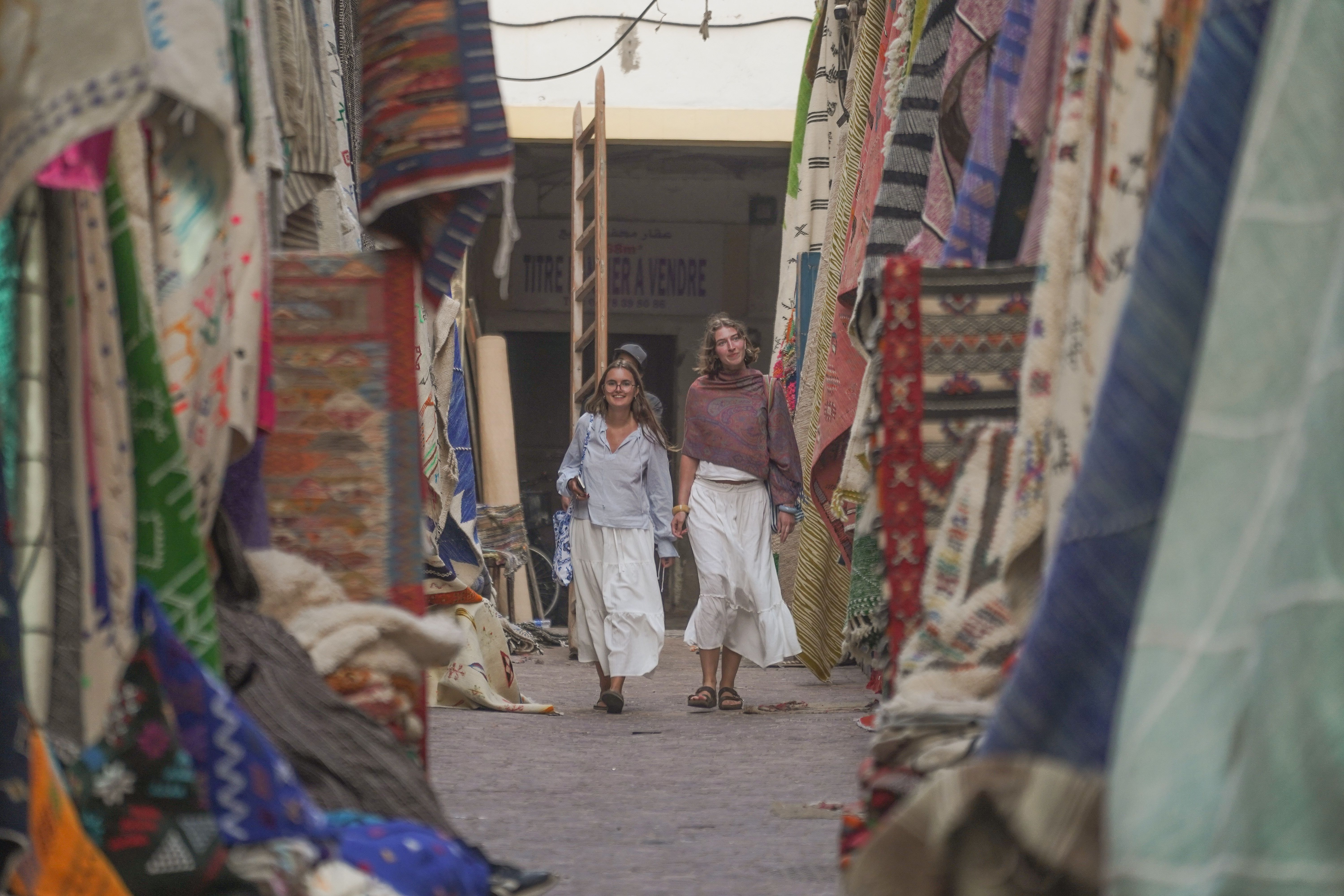
Online discourse regarding solo female travel across the Kingdom of Morocco tends to bifurcate into two equally deceptive narratives. On one end of the spectrum, sponsored lifestyle influencers portray the country as an effortless bohemian daydream of pastel courtyards, silk kaftans, and fragrant mint tea poured by endlessly welcoming artisans. On the other end, sensationalized forum threads describe it as an inescapable, predatory gauntlet where an unescorted woman cannot cross a medina without being swarmed. As is standard in investigative travel journalism, the reality on the ground conforms to neither extreme. Morocco is remarkably safe from violent crime, thanks to a heavy security apparatus and severe judicial penalties for offenses against foreign travelers. Yet it remains one of the most psychologically exhausting destinations on earth for an independent woman. The friction lies not in physical danger, but in relentless cultural friction: continuous staring, aggressive sales tactics, transactional hospitality, and gender dynamics unfamiliar to Western travelers. This dispatch documents the unvarnished realities of traveling solo in Morocco—and the exact behavioral protocols required to navigate it with confidence.
Violent Crime Risk
Exceptionally Low (Strict Penal Laws)
Primary Friction
Persistent Male Gaze & Street Harassment
Key Safe Haven
Staffed Heritage Riads (24/7 Gatekeepers)
Transit Protocol
ONCF 1st Class & CTM Premium Lines
"In Morocco, polite deference is frequently misinterpreted as an invitation to engage. The most critical defense a solo woman carries through an ancient medina is not pepper spray, but deliberate visual detachment and unapologetic assertiveness."
The single most pervasive reality a solo female traveler will experience in Morocco is the absolute omnipresence of the public male gaze. In traditional Moroccan urban spaces, the street, the public square, and the sidewalk café are historic male domains. Men sit outside on terrace chairs facing outward, drinking espresso for hours, actively observing pedestrian foot traffic. An unescorted woman—particularly a foreign traveler carrying herself with unfamiliar body language—becomes an immediate visual magnet.

The Deconstruct of the "Catcall": The comments you hear—ranging from multilingual pleasantries ("Welcome to Morocco," "Gazelle," "Beautiful eyes," "Where are you going?") to invasive whistles—are rarely precursors to physical violence. They are social tests. Young men frequently toss out remarks to gauge vulnerability, interest, or naivety.
The Field-Tested Counter-Strategy: Western social conditioning teaches women to smile nervously, make brief eye contact, or offer a polite reply to deflect awkwardness. In Morocco, this reaction does the exact opposite: it serves as permission to continue following you. The correct tactical behavior is complete visual indifference. Put on dark sunglasses, keep your gaze fixed straight ahead, square your shoulders, and walk with deliberate direction. You are under no obligation to acknowledge strangers greeting you from café corners.
The ancient medinas of Fes, Marrakech, and Meknes were constructed centuries ago deliberately designed to disorient invaders. They are dense clusters of blind corners, winding alleys (derbs), and dead ends, where tall mud-brick walls disrupt satellite signals and cause GPS applications like Google Maps to glitch or freeze entirely.
The "La Route Est Fermée" Scheme: The moment a solo woman pauses at an intersection and looks down at her smartphone with uncertainty, spotters will strike up a conversation: "Madame, that way is closed today—it is prayer time," or "No way out, dead end, follow me." In 95% of cases, the street is completely open. The goal is to steer you into an isolated dead end, where the "helper" will demand 50 to 100 MAD ($5 to $10 USD) to guide you back to safety.
Navigation Protocol: Download offline topographic maps via Maps.me or organic vector maps before entering any medina. If you are genuinely lost, do not stand still on a corner looking confused. Walk with purpose into an occupied pharmacy, a bank with a uniformed guard, or a boutique run by a woman, and ask for directions there. Never accept navigational assistance from young men idling on alleyway corners.
Where you choose to sleep as a solo female traveler in Morocco is an operational safety decision, not just a matter of room aesthetics. Properties differ significantly in their physical security perimeter and their level of guest support.
Medina Hostels
Hover or Tap for Audit 🔄
Hostel Security Audit
High: easily find travel companions for market outings
Unmonitored shared doors; transient crowds; often deep in unlit residential alleys
Staffed Heritage Riad
Hover or Tap for Audit 🔄
Riad Security Audit
Maximum: heavy bolted doors, 24/7 on-site manager, staff known to neighbors
Staff will dispatch a trusted escort to meet you at the taxi gate after dark
Ville Nouvelle Hotels
Hover or Tap for Audit 🔄
Modern Hotel Audit
Immediate: curbside taxi pickup right outside the guarded lobby
Completely removed from historic quarters; impersonal corporate security
The Riad Advantage: For a woman traveling alone, a well-reviewed, family-run boutique riad is your most effective security asset. The manager acts as an informal neighborhood sponsor. Street touts know who operates each riad; once they see the riad host acknowledge you, aggressive behavior drops dramatically. Always message your riad ahead of time to arrange private arrival pick-up directly from the airport terminal or train station.
Intercity movement is where many solo travelers encounter acute discomfort. Public transport options across Morocco vary widely in personal safety and individual boundary management.

The Rail Corridor (ONCF): Morocco's rail network is one of the most advanced in Africa. The high-speed Al Boraq train connecting Tangier, Rabat, and Casablanca, alongside standard express routes linking Fes and Marrakech, is safe, modern, and punctual. The Crucial Upgrade: Always purchase a First Class ticket. The minimal price difference ($8 to $15 USD more) gives you an assigned seat in a quiet compartment, away from the crowded standing corridors of Second Class carriages where unwanted advances and uncomfortably close contact are far more common.
The Grand Taxi Warning: Intercity "Grand Taxis" (typically vintage Mercedes sedans or Dacia minivans) operate on a shared-fill model. Drivers do not depart until they pack six passengers into the vehicle—two in the front passenger seat, four packed across the back bench. For a solo woman, this means being physically pressed shoulder-to-shoulder against male passengers for hours on end. Unless you purchase every seat in the vehicle for privacy, opt instead for long-distance coaches run by CTM or Supratours, which operate with assigned individual seats and enforce personal space.
Travel forums frequently claim that if a woman wears a loose maxi dress and covers her hair, street catcalling will magically disappear. Our on-the-ground investigations show this is fundamentally untrue. Local Moroccan women wearing full hijabs or abayas also experience street catcalling; clothing does not serve as a magic cloak of invisibility.

What Modesty Dress Actually Does: While conservative clothing will not prevent 100% of street comments, it removes an easy excuse for men to escalate attention. Showing bare shoulders, low-cut cleavage, or bare midriffs and thighs signals unfamiliarity with conservative cultural norms and attracts significantly more aggressive comments.
The Tactical Wardrobe:
• Fabrics: High-grade linen, breathable rayon, or light cotton that breathes in 35°C (95°F) heat.
• Silhouettes: Wide-leg culottes, ankle-length skirts, loose button-down boyfriend shirts, and light dusters covering your hips.
• The Scarf: Keep a light pashmina in your daypack to drape over exposed shoulders when walking through traditional residential neighborhoods or visiting historic madrasas.
• The "Armor": A pair of dark, polarized sunglasses helps mask where your eyes are looking, preventing accidental eye contact with street touts.
The biggest logistical error solo female travelers make is landing directly into the sensory pressure-cooker of Marrakech's Jemaa el-Fnaa or the 9,000 alleys of Fes el-Bali on Day 1. The sheer intensity often causes instant burnout, anxiety, and retreat.
The Pacing Strategy: Reverse your route. Begin your trip in smaller coastal or mountain enclaves to build confidence navigating medinas before tackling major imperial cities:
Day 1: Arrival & The Atlantic Buffer (Essaouira)
• Land at Marrakech Menara Airport (RAK) and immediately transfer via a pre-booked CTM bus or private car directly to Essaouira (approx. 2.5 to 3 hours).
• Essaouira’s coastal medina is laid-back, built on a wide, breezy grid system, and largely free of aggressive street touting. Walk the harbor ramparts, adapt to local commerce, and practice bargaining in a low-pressure environment.
Day 2: Coastal Independence & Confidence Building
• Spend the morning walking unassisted through Essaouira’s craft markets.
• Book a traditional female-run private hammam scrub (such as Les Bains de l'Orient) to relax and build positive connections with local Moroccan women.
Day 3: Infiltrating the Imperial Core (Marrakech)
• Board the early morning Supratours bus returning to Marrakech. Check into a vetted, staffed riad in the Kasbah or Mouassine districts.
• You now possess the body language, basic Darija phrases, and price benchmarks needed to navigate the central souks with authority.
Knowing what to do when a boundary is crossed turns anxiety into clear, decisive action. Here is how to handle unwanted encounters systematically:
⚠️ Verbal Escalation: Darija Power Phrases
English phrases ("Please leave me alone!") often sound weak or inviting to persistent harassers. Deploying short, commanding phrases in Moroccan Arabic (Darija) signals you are culturally experienced and not an easy target:
• "La, Shukran!" (No, thank you!) — Said once, firmly, without smiling.
• "Baraka!" (Enough!) — Sharp and definitive.
• "Sir fhalik!" (Go away!) — Loud enough for surrounding shopkeepers to hear.
• "Hchouma!" (Shame on you!) — A heavy cultural deterrent that calls social accountability from nearby elders.
Leveraging Local Bystanders: Moroccan culture values public honor and family respect. If a man continues trailing you or makes you feel physically cornered, do not stay silent. Turn toward an older local shopkeeper, a woman accompanied by children, or a family group, and state loudly: "Aidez-moi, s'il vous plaît!" (Help me, please!). Local shop owners often step in immediately to admonish the harasser, as aggressive touts hurt neighborhood business and reputation.
The Brigade Touristique: Major cities (Marrakech, Fes, Tangier) have dedicated plainclothes Tourist Police (Brigade Touristique). Moroccan authorities enforce strict penalties against unauthorized faux guides and anyone harassing foreign visitors. Threatening to call the police ("Chouf la police!") is often enough to send a persistent scammer walking away immediately.
Frequently Asked Questions
Yes, violent physical crime against foreign women is rare in Morocco due to heavy policing and strict penal codes. However, non-violent harassment, persistent catcalling, unsolicited following, and aggressive street touting are common. Surviving and enjoying the country as a solo woman requires strong psychological boundaries, cultural literacy, and deliberate situational awareness.
Dressing conservatively does not eliminate harassment entirely, but it significantly reduces unwanted attention. Aim for lightweight, loose-fitting linen trousers or maxi skirts, high-cut tops covering collarbones, and shirts that cover elbows and shoulders. Carrying a lightweight scarf to cover your chest or hair in conservative residential quarters is an effective tactical layer.
Ignore it entirely. Western instinct often pushes travelers to smile politely or confront the harasser; in Morocco, eye contact, smiling, or verbal pushback is frequently misread as an opening for further engagement. Wear sunglasses to mask eye contact, walk with purposeful posture, and deploy a firm, loud 'Baraka!' (Enough!) or 'Sir fhalik!' (Go away!) only if someone continues trailing you.
Main, well-lit thoroughfares like Marrakech's Jemaa el-Fnaa or Chefchaouen's central plaza remain populated and relatively safe until 10:00 PM. However, deep residential alleyways (derbs) in ancient medinas become deserted, poorly lit maze-like corridors where navigation apps lose GPS signal. Solo women should arrange for their riad host to meet them at the nearest taxi drop-off point after dark.
Use the state-operated ONCF train network—specifically booking First Class compartments where seating is assigned and conductor presence is regular. For regional routes without rail service (such as Chefchaouen or Essaouira), choose the government-regulated CTM bus line or Supratours. Avoid shared 'Grand Taxis' for long intercity journeys, as they crowd multiple passengers tightly into cramped vehicles without personal space.
Equip Your Moroccan Solo Expedition 🇲🇦
Travel with clarity. Secure trusted airport transfers, high-speed rail connections, and thoroughly vetted, women-recommended riads.
Book Verified Rail & Private Transfers