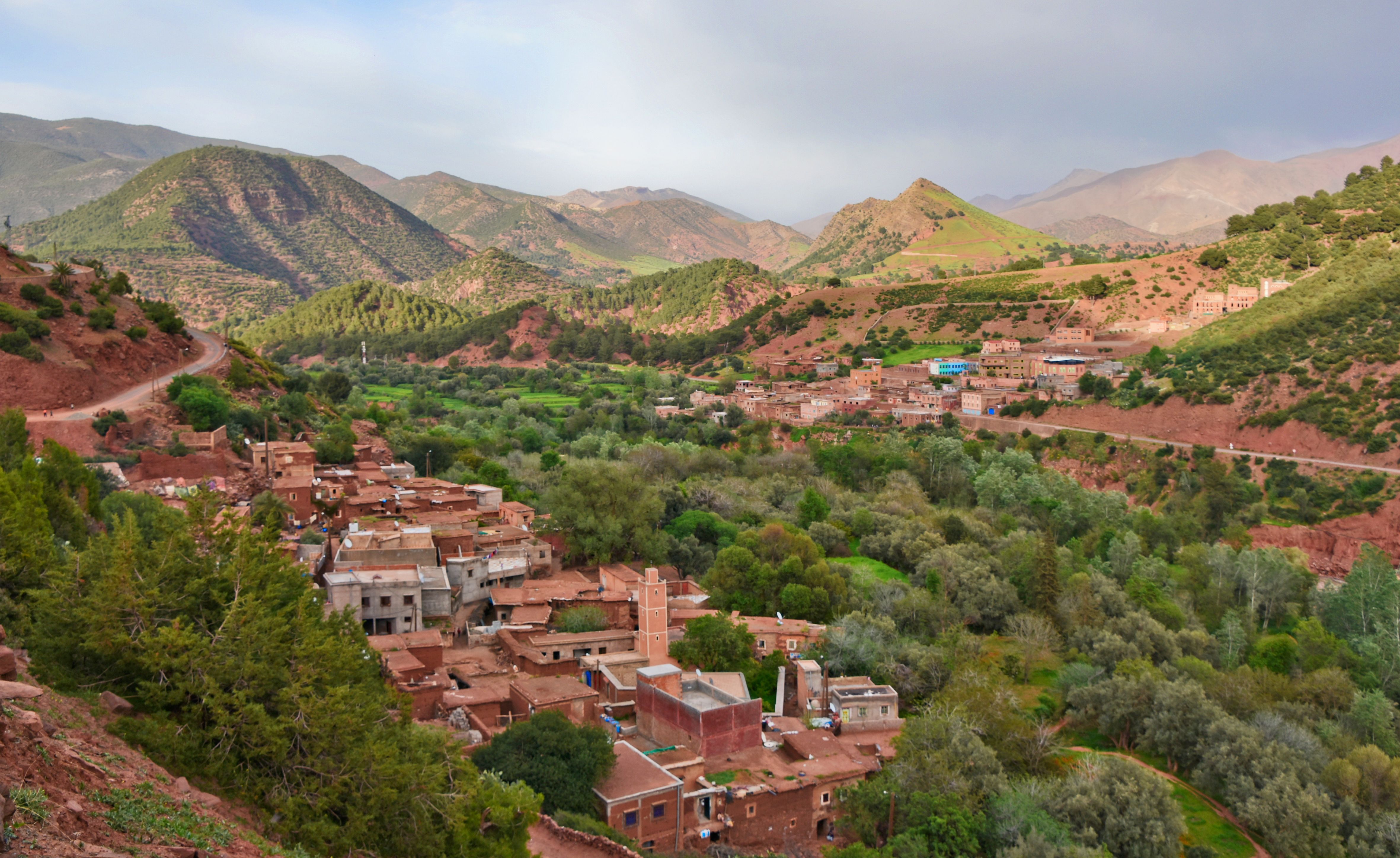
Mount Toubkal, North Africa's highest peak, dominates Moroccan trekking marketing to the point of a near-monopoly. Open any major adventure outfitter's brochure, and you will invariably be directed toward the same rocky, heavily commercialized summit trail. The travel industry favors simple superlatives—"bagging the highest peak"—because it sells effortlessly to the bucket-list crowd. But our on-the-ground investigation in the High Atlas reveals a stark reality: the Toubkal standard route has become a crowded, dusty conveyor belt, stripping away the very isolation and cultural authenticity travelers come to Morocco to find. Just one valley over lies a network of ancient transhumant trails winding through red-dirt Berber villages, walnut groves, and cascading waterfalls. This dispatch uncovers the alternative treks operators rarely advertise, offering Toubkal-level grandeur with a fraction of the foot traffic.
The Trap
Standard Toubkal Route
The Alternative
Azzaden Valley / Ouirgane
Cultural Reality
Authentic Berber Hospitality
Crowd Density
90% Less Than Toubkal
"Toubkal is marketed heavily because it's the highest peak and the easiest sell. But as a local guide, I will tell you: it is not the best trek in the range. The true soul of the Atlas Mountains lives in the quiet villages of the Azzaden Valley, where the only sounds are the river and the call to prayer."
To understand why you've only heard of Mount Toubkal, you must understand the mechanics of mass adventure tourism. Selling a 4,167-meter peak requires zero nuance. It appeals directly to the ego-driven adventurer looking to tick a box.
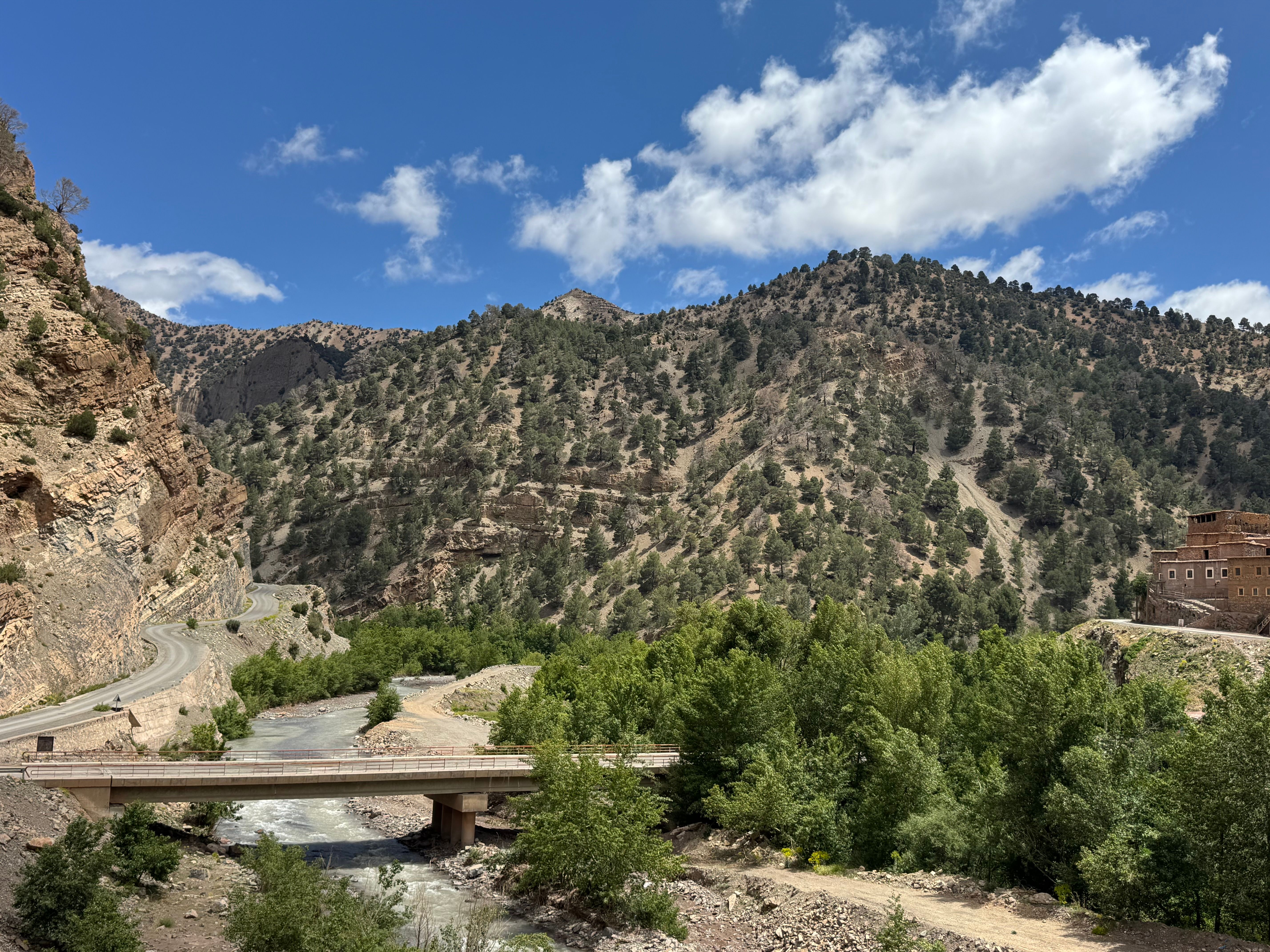
The reality on the ground during peak season (April-May and September-October) is less than romantic. The main trail from Imlil to the Nelter Refuge is a heavily trodden, dusty thoroughfare. Mules, porters, and lines of exhausted hikers march nose-to-tail. The refuge itself often resembles a chaotic hostel rather than a serene mountain retreat, complete with snoring dormitories and queued toilets. You are experiencing the mountain, yes, but you are completely insulated from the traditional Amazigh (Berber) way of life.
Our editorial recommendation shifts the focus just one ridge to the west: the Azzaden Valley (often called the Valley of Colors). While Toubkal's terrain is largely barren and lunar, Azzaden is an explosion of life, defined by terraced agriculture, vibrant red earth, and ancient juniper forests.
The Route Profile: Typically structured as a 3-to-4-day circuit starting from Imlil or Ouirgane, this route takes you through the Tizi n'Mzik pass (2,489m) before descending into a gorge lined with walnut, apple, and cherry orchards.
Instead of sleeping in an overcrowded refuge, you sleep in Gîtes d'étape (village guesthouses) in remote settlements like Aït Aïssa or Tizi Oussem. Here, dinner isn't mass-produced spaghetti; it's a slow-cooked chicken and lemon tagine prepared by the village matriarch, eaten on a rooftop terrace as the Milky Way emerges over the snow-capped peaks.
Bypassing the major Western tour operators in favor of local Moroccan outfitters not only ensures your money stays in the local economy, but it drastically reduces your overhead. Here is our exclusive financial breakdown for a 3-day Atlas Mountain circuit:
Independent Hiker
Hover or Tap for Details 🔄
Budget Breakdown
Hiring a local guide locally in Imlil
Basic village Gîtes (shared rooms)
Supported Trekker
Hover or Tap for Details 🔄
Mid-Range Breakdown
Licensed Guide + Muleteer for gear
Private cook preparing hot trail lunches
Bespoke Atlas
Hover or Tap for Details 🔄
Luxury Breakdown
Stays at Kasbah Toubkal or luxury lodges
Private 4x4 transfers from Marrakech
Journalist Tip: Booking a standard Toubkal package through a London or New York-based agency will easily cost $800+ for a 3-day trip, with the actual local guides receiving a fraction of that margin. Book directly with Moroccan agencies based in Marrakech or Imlil.
Because standard-package operators default to Toubkal, finding a guide willing to build an itinerary around quieter routes usually requires specifically requesting it. Do not accept the default trek proposed via email.
The Imlil Syndicate: When you arrive in the trailhead town of Imlil, you will find the official Bureau des Guides. This is a local syndicate of highly trained, government-licensed mountain guides. You can literally walk in, request a 3-day trek through the Azzaden Valley, and they will assign you a guide and muleteer for the following morning at regulated, fair-trade prices.
Responsible trekking requires strict adherence to local customs. The High Atlas is not a playground; it is the ancestral home of the Amazigh (Berber) people.
⚠️ Cultural Notice: Village Etiquette
When trekking through the alternative valleys, you are walking directly through people's backyards and agricultural terraces. Dress conservatively (shorts mid-thigh or longer, shoulders covered). Never photograph village women or children without explicit consent. Do not hand out candy or money to children on the trail, as it encourages a begging economy; instead, if you wish to contribute, donate supplies directly to the village school or elder.
Altitude Awareness: While Azzaden is lower than Toubkal, you are still crossing passes exceeding 2,400 meters (7,800 feet). Hydration is critical. Bring a robust water filtration system (like a Lifestraw or Sawyer Squeeze) or purification tablets, as bottled water creates a massive plastic waste issue in these remote valleys with no formal trash collection.
Investigative FAQ
Mount Toubkal is a legitimate, worthwhile achievement if bagging peaks is your primary goal. However, our on-the-ground assessment reveals that for travelers seeking cultural immersion and pristine wilderness, Toubkal's heavily trafficked 'highway' falls short compared to adjacent valleys.
No. Unlike Toubkal in the winter—which requires crampons and ice axes—routes like the Azzaden Valley or the Yagour Plateau are strictly trekking routes. You need solid cardiovascular fitness, but no technical mountaineering experience.
Technically yes in some lower valleys, but following the tragic events of 2018, Moroccan authorities mandate licensed guides for the Toubkal National Park region. For alternative routes, a guide is highly recommended not just for safety, but to facilitate genuine interactions with local Berber communities.
Spring (April to early June) and Autumn (September to November) offer the most stable conditions. Spring brings blooming walnut and cherry orchards in the lower valleys, while Autumn provides crisp visibility without the hazardous summer heat.
Most treks begin in Imlil or Ouirgane. A private Grand Taxi from Marrakech takes about 90 minutes to Imlil and costs roughly 300-400 MAD ($30-$40). Shared taxis are available from the Bab Rob taxi rank in Marrakech for a fraction of the cost, though they require waiting until the vehicle is full.
Execute This Expedition 🥾
Skip the overcrowded standard routes. Connect directly with local operators offering custom Azzaden Valley and High Atlas alternative treks.
Audit Local Guides Check Imlil Lodges