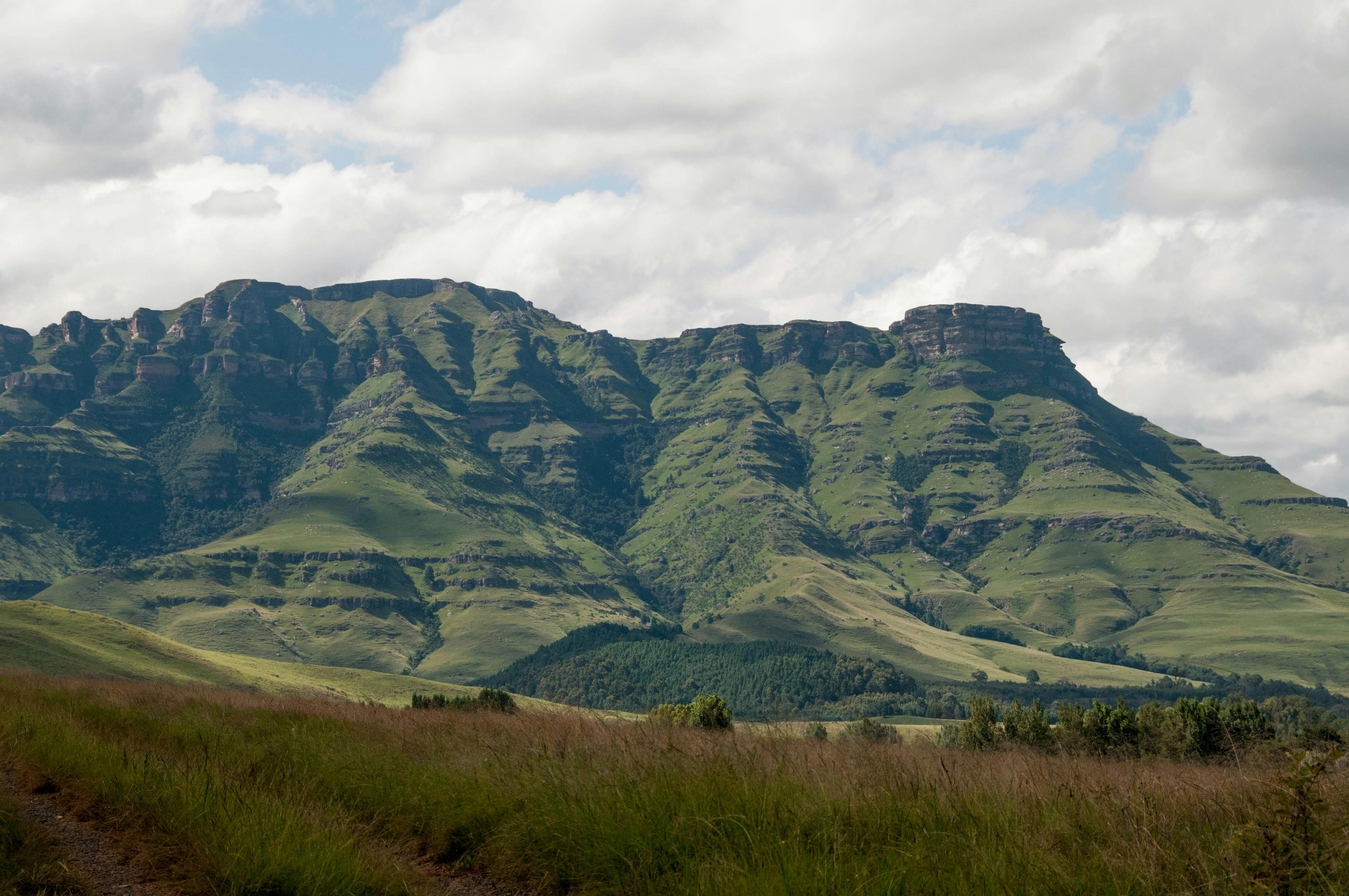
Examine almost any first-time visitor's itinerary for South Africa, and you will notice a predictable, algorithm-driven loop: Cape Town’s coastal sheen, the wine valleys of Stellenbosch, and a frantic dash to the Kruger National Park for the Big Five. Table Mountain inevitably claims the title of the country's most famous peak. But 800 miles to the northeast lies a jagged, 3,000-meter-high basalt escarpment that separates South Africa from the mountain kingdom of Lesotho. Known in Zulu as uKhahlamba—the "Barrier of Spears"—the Drakensberg Mountains represent the most dramatic, yet chronically overlooked, alpine wilderness on the African continent. This dispatch strips away the standard tourism marketing to reveal the logistical realities of accessing these trails, navigating the volatile weather, and experiencing the raw, unfiltered altitude of the Amphitheatre without the Cape Town crowds.
Transit Hub
Johannesburg (JNB) or Durban (DUR)
Optimal Season
March to May (Autumn)
The Crown Jewel
The Amphitheatre & Tugela Falls
Ground Truth
Volatile weather & steep chain ladders
"To hike the Drakensberg is to accept your own insignificance. It is a 200-kilometer wall of vertical rock where the silence is absolute, the weather is unforgiving, and the views make Table Mountain look like a suburban hill."
Why does a UNESCO World Heritage site of this magnitude remain a "secret" to international travelers? The answer is purely logistical geography.
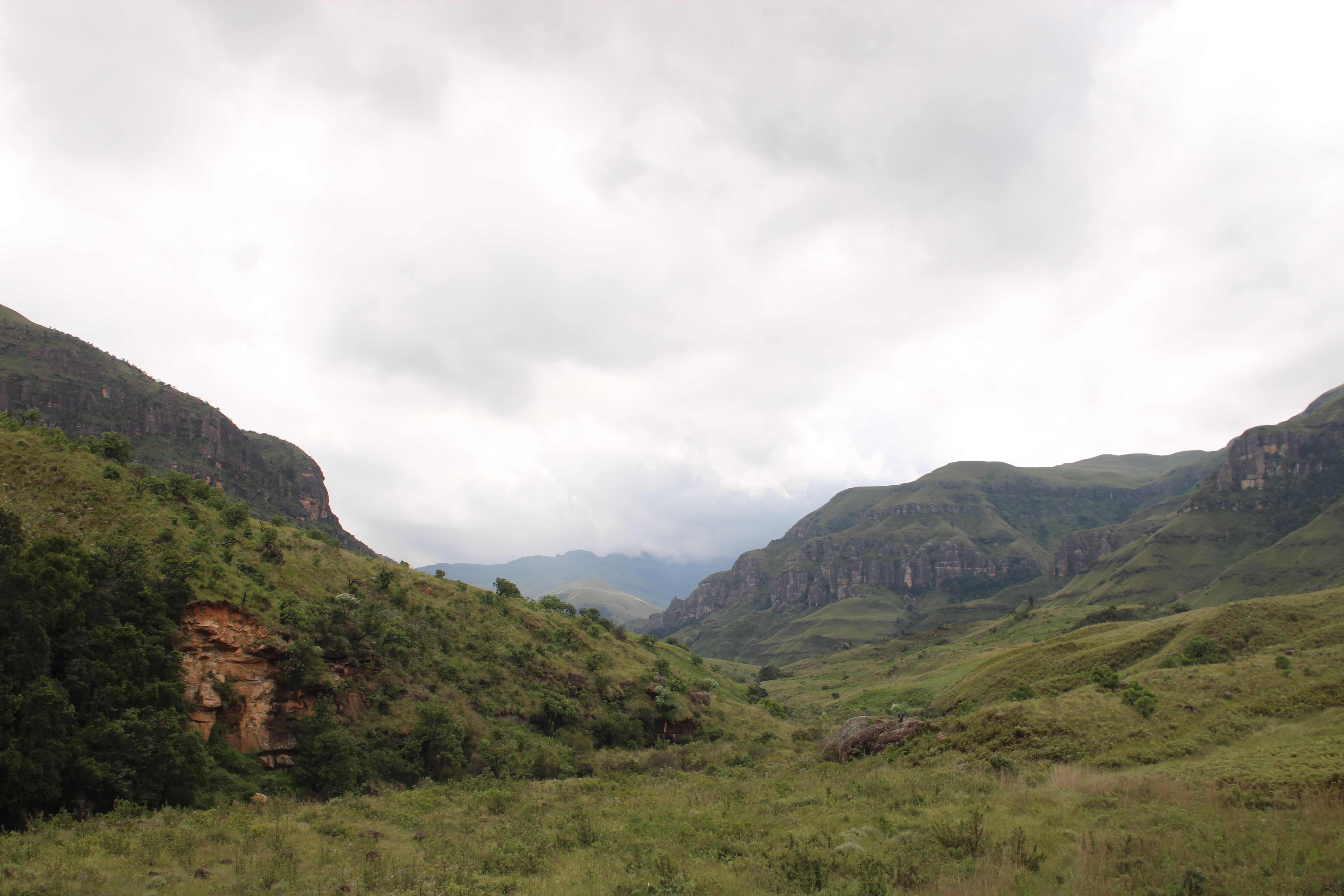
The standard South African vacation is capped at 10 to 14 days. Planners dedicate a week to the Western Cape and three days to a safari in the northeast. The Drakensberg sits in the KwaZulu-Natal province, requiring a dedicated 4.5-hour drive from Johannesburg or a 2.5-hour drive from Durban. It does not fit neatly into a rushed schedule.
The Journalist's Workaround: The barrier to entry is exactly what preserves its integrity. By committing a minimum of 3 nights to the Northern or Central Berg, you trade the queue-heavy bottlenecks of Cape Town's Lion's Head for absolute alpine isolation.
If you only have time for one major expedition, the Sentinel Peak hike to the top of the Amphitheatre is the undisputed main event. The Amphitheatre is a rock wall stretching five kilometers long and 1,000 meters high.
The Route Reality: This is not a casual stroll. Starting from the Sentinel Car Park (accessed via a notoriously rough, unpaved mountain road that destroys rental car tires—shuttles from Witsieshoek Mountain Lodge are advised), the hike is a strenuous 12-kilometer round trip.
To reach the summit plateau, hikers must ascend the infamous Chain Ladders—two sets of metal ladders bolted directly into a vertical rock face. It requires a head for heights. The reward? Standing at the precipice of Tugela Falls, which, depending on how you measure it, is either the first or second tallest waterfall on Earth, plunging 948 meters into the gorge below.
The infrastructure here is remarkably varied, catering heavily to domestic South African holidaymakers. Unlike the hyper-inflated safari lodges of the Kruger, the Drakensberg remains highly accessible. Here is our financial breakdown (prices in USD for clarity):
Budget Trekker
Hover or Tap for Details 🔄
Budget Breakdown
KZN Wildlife Campsites or Amphitheatre Backpackers.
Self-catering groceries from town (Spar) and braai (BBQ) at camp.
Mid-Range Explorer
Hover or Tap for Details 🔄
Mid-Range Breakdown
Private mountain chalets or historic family resorts (e.g., Champagne Castle).
Resort buffet dinners, local trout, and decent local wines.
Alpine Luxury
Hover or Tap for Details 🔄
Luxury Breakdown
Boutique eco-lodges (Montusi Mountain Lodge) with private peak views.
Multi-course dining, spa treatments, and private guided helicopter flips.
Public transport in this region is non-existent. You must rent a vehicle. The N3 highway connecting Johannesburg and Durban is excellent, but once you turn off into the mountain passes, the reality of rural South African infrastructure becomes apparent.
Pothole Warning: Potholes on the R74 and connecting access roads can be massive. Do not drive these secondary roads at night. Cattle and goats frequently sleep on the tarmac, and street lighting does not exist. An SUV with high clearance is heavily recommended, though a standard sedan can make it if driven cautiously.
The Drakensberg commands immense respect. It is an alpine environment prone to severe and sudden mood swings.
⚠️ Logistical Notice: The 2 PM Thunderstorm Rule
During the summer months (November to February), the Drakensberg operates on a strict meteorological schedule. Mornings are pristine and clear. By 1:00 PM, violent thermal thunderstorms gather over the escarpment, unleashing severe lightning and torrential rain. You must start your hikes at dawn and aim to be off the high peaks or safely inside a cave by early afternoon. Lightning strikes on the escarpment are a genuine, deadly hazard.
Security: Unlike South Africa's urban centers, crime in the Drakensberg is extremely rare. Your main risks are environmental. Always fill out the mountain register at the KZN Wildlife office before departing—if the mist rolls in and you get lost on the escarpment, this logbook is the only way search and rescue knows you are up there.
Frequently Asked Questions
The Northern and Central Drakensberg regions (where the Amphitheatre is located) are roughly a 4 to 4.5-hour drive from Johannesburg's O.R. Tambo International Airport via the N3 toll route.
For well-marked lower-elevation day hikes, independent trekking is perfectly safe. However, for multi-day escarpment traverses, crossing into Lesotho, or summiting via the chain ladders, a local guide is highly recommended due to rapid weather changes and unmarked terrain.
Geographically, yes. The primary dangers are environmental: sudden thunderstorms, thick fog (whiteouts), and freezing temperatures at altitude. Wildlife risks are minimal, though baboons are present. Always sign the mountain register before departing.
Plan Your Expedition 🧭
Access exclusive rates on remote mountain lodges and book local hiking guides before they sell out during peak season.
Check Lodge Availability Hire a Local Guide